
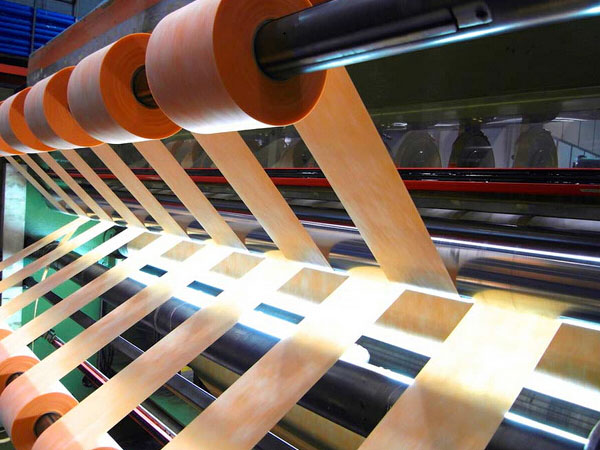
A slitting machine is a type of equipment used to cut large raw materials into small pieces or rolls. The traditional control scheme is usually a control system based on PLC (programmable logic controller), and its main function is to realize the automatic control of the lifting, feeding, cutting, testing, discharging and other processes of the equipment. Below, we will give a brief introduction to the slitting machine with traditional control scheme.
First of all, the feeding process. When the raw material is placed on the feed table, the sensor detects it and transmits the signal back to the PLC. After the PLC receives the signal, it turns on the elevator to lift the raw materials to the cutting table, and after the elevator is in place, the signal is transmitted back to the PLC.
Secondly, the cutting process. When the elevator is in place, after the PLC receives the signal, it turns on the cutting machine and cuts the raw materials according to the preset cutting rules and lengths. The slitting machine of the traditional control scheme can realize a variety of cutting methods such as fixed length, fixed width, fixed weight, etc., which improves the flexibility and cutting accuracy of the equipment.
Next is the discharging process. After the cutting is completed, the PLC controls the receiving table to rise and move to the cutting position, collects the cut blanks, and lowers the elevator at the same time. At this point, the machine's discharge port can transfer the cut blanks to the next processing or storage system.
Finally, there is the process of self-monitoring. The entire control system also includes a self-monitoring function to ensure the safe operation of the equipment. If an abnormality or fault is detected in the system, the PLC will automatically stop the equipment and send an alarm to remind the operator to maintain the equipment.
In general, the slitting machine control of the traditional control scheme is simple and stable, but it pursues standardized and repeatable production performance, and cannot adapt to the individual needs of subdivided fields and complex specifications. With the development of information technology, the adaptive intelligent control system has gradually replaced the traditional control system, which can be intelligently adjusted according to different raw materials and different processing methods, so as to achieve a more efficient and intelligent production mode.
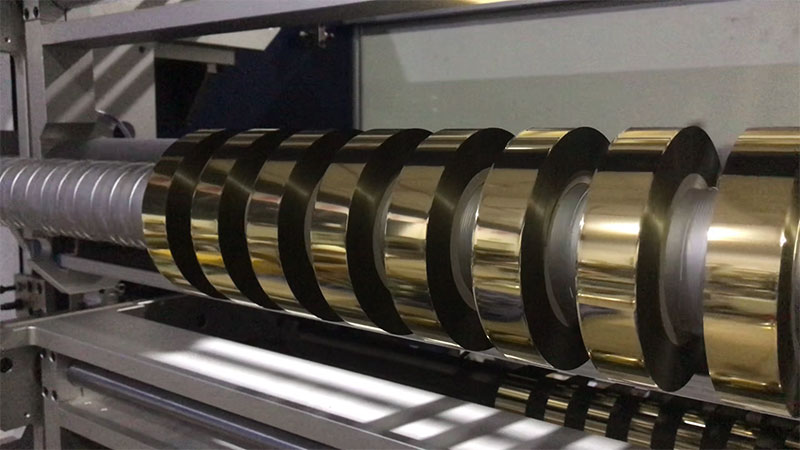
The tension control in the slitting stage directly determines the yield rate of subsequent hot stamping processes.
28. September, 2026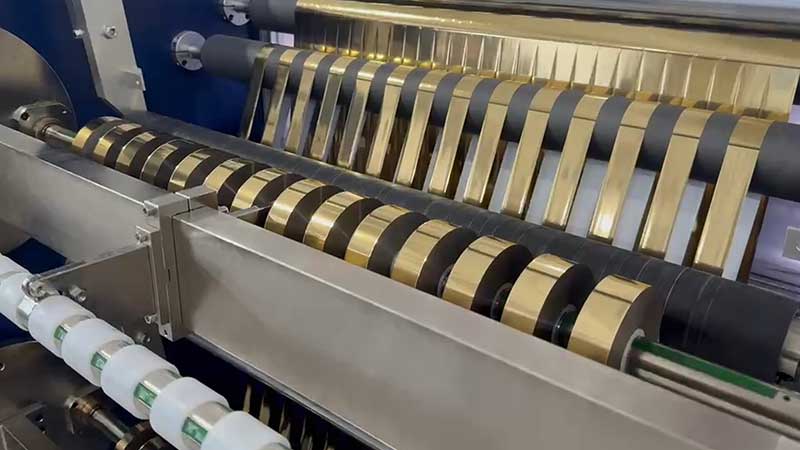
The key to selection is to grasp three parameters that truly determine slitting quality: slitting accuracy, tension control, and tool system.
28. September, 2026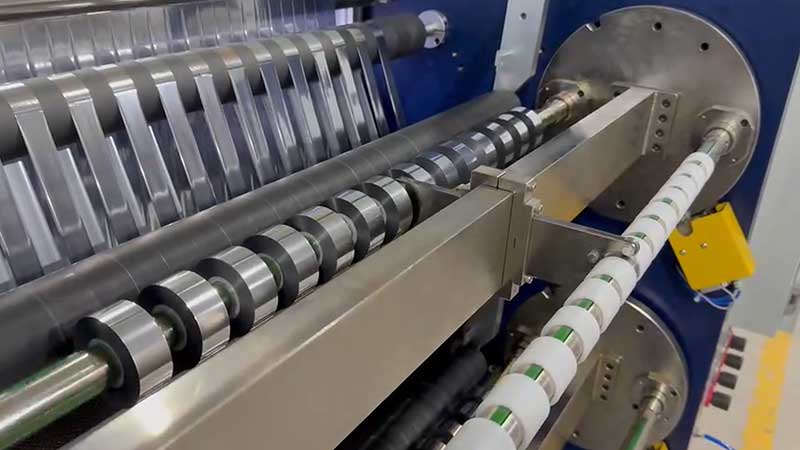
But what truly determines whether a slitting machine is "in sync" is not the absolute value of a single parameter, but the matching logic between width and speed.
28. September, 2026Width determines the rigidity and correction accuracy of the equipment's structure, while speed tests the real-time responsiveness of tension control.
24. September, 2026This article provides a current selection framework from four dimensions: material adaptation, core parameters, intelligent configuration, and cost evaluation.
24. September, 2026


 English
 Deutsch
 Français
 Español
 Português
 日本語
日本語 русский
 한국어
한국어 عربي
عربي ภาษาไทย
 Tiếng Việt
 Italiano