
The tension control system of the film slitting machine is key to the quality of the slitting machine, as it directly affects the flatness, dimensional accuracy, edge quality, and subsequent processing performance of the film. The following is a detailed analysis of its core role and principles:
1. The direct consequences of uneven tension
• Material deformation: Excessive tension will lead to tensile deformation of the film (such as thinning and warping), while too little tension may cause sagging and wrinkling.
• Edge defects: Tension fluctuations can easily cause uneven edges (burrs, jagged) or even broken films during slitting.
• Winding quality: Unstable winding tension can lead to "burst ribs" (local bulges), collapsed edges, or internal air interlayering of the coil, affecting subsequent unwinding and processing.
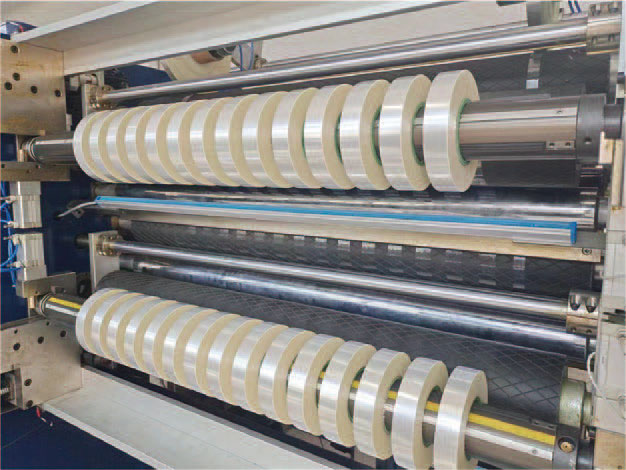
2. The core function of tension control
• Dynamic stability: Real-time detection of tension through sensors (e.g., tension rollers, magnetic particle brakes), closed-loop feedback adjusts the torque or speed of the unwinding/unwinding motor, offsetting interference such as speed changes and uneven material thickness.
• Segmented control: The slitting machine is usually divided into unwinding area, traction area, and winding area, and the tension of each section needs to be adjusted independently and coordinated (for example, the winding tension needs to decrease with the increase of the winding diameter).
• Material adaptability: Different films (such as PET, PE, BOPP) have different elastic modulus and tensile strength, and the corresponding tension curves need to be matched.
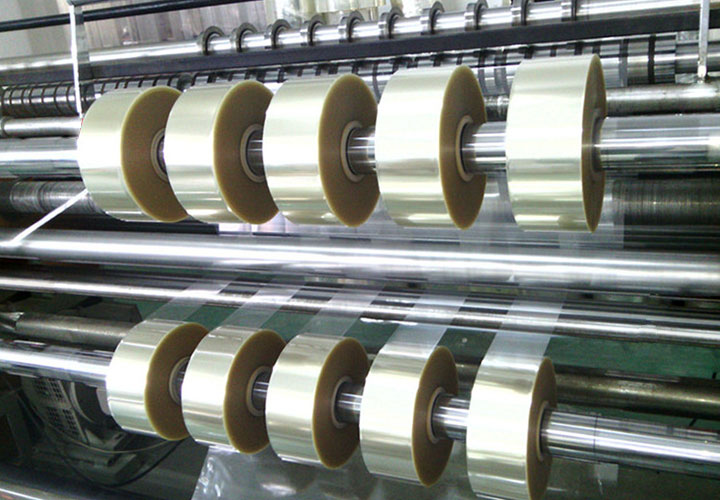
3. Key technologies affect the quality of slitting
• Taper control: The tension should be proportionally reduced during winding (taper factor) to prevent the outer film from squeezing the inner layer and causing a "hard core".
• Inertia compensation: When accelerating/decelerating, the system needs to predict the effect of inertia on tension (e.g. inertia force will cause a sudden increase in tension during a large coil diameter emergency stop).
• Correction linkage: The tension system needs to be coordinated with the guiding device (EPC) to avoid unilateral tension sudden changes caused by deviation.
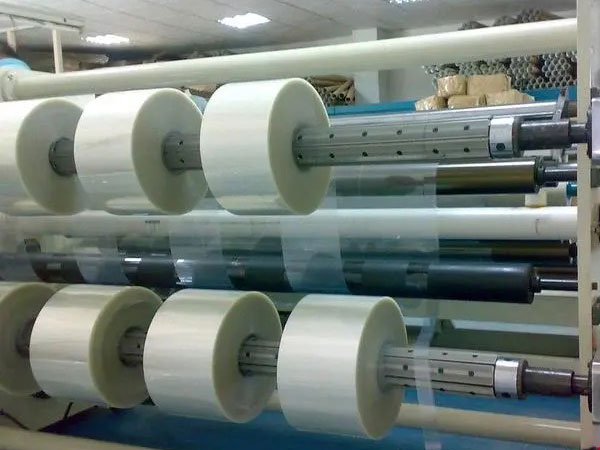
4. Optimization direction of advanced systems
• Intelligent algorithms: Fuzzy PID or adaptive control to respond to changes in material properties or fluctuations in process parameters.
• Sensorless control: estimate tension by motor current (save hardware costs, but slightly less accurate).
• Digital twin: Simulate different parameter combinations through simulation and pre-adjust the tension curve to reduce test machine losses.
5. Typical problems in actual production
• Static vs. dynamic difference: Static tension is normal during commissioning, but loss of control due to vibration or delay during high-speed operation.
• Material stick-slip effect: Periodic tension fluctuations can occur due to changes in the coefficient of friction between certain films (e.g., CPP) and rollers.
• Environmental interference: Temperature changes affect the elasticity of the film, and humidity changes can cause electrostatic adsorption to interfere with the sensor.
conclusion
The tension control system is the "central nervous system" of the film slitting machine, and its accuracy and stability directly determine the consistency of the slitting quality. Modern high-precision slitting machines (such as those used for lithium battery separators or optical films) even require tension fluctuations to be controlled within ±1%, which requires deep coordination of mechanical design, sensor technology and control algorithms.
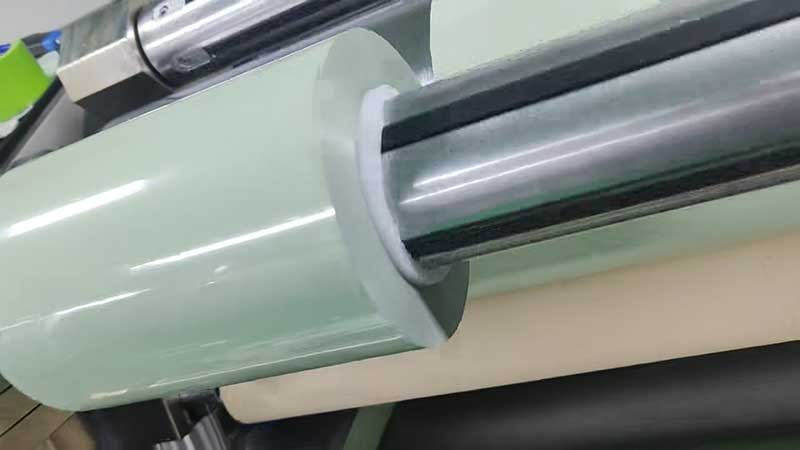
This article outlines a clear selection approach from four dimensions: material adaptation, core technical parameters, efficiency and cost, and supplier selection.
09. September, 2026Balancing speed and precision in film slitting machines is essentially a test of "control capability."
02. September, 2026This article will delve into the current application status, core technologies, and development trends of this equipment in the new energy sector.
28. August, 2026the film slitting machine is the core equipment for slicing wide, large rolls into narrow rolls of specific specifications.
26. August, 2026Tension control technology for thin film slitting machines involves interdisciplinary integration of control theory, mechanical design, and material mechanics.
26. August, 2026


 English
 Deutsch
 Français
 Español
 Português
 日本語
日本語 русский
 한국어
한국어 عربي
عربي ภาษาไทย
 Tiếng Việt
 Italiano