

In the face of the urgent need for industrial upgrading, slitting machine manufacturers actively integrate into the wave of intelligent manufacturing and explore new heights of production efficiency through intelligent upgrading. Today we will introduce the exploration of slitting machine manufacturers in production efficiency.
The first strategy is to integrate advanced sensors and control systems to enable the slitter to monitor and self-adjust in real time, ensuring cutting accuracy while reducing downtime and improving overall smoothness.
Secondly, the introduction of cloud computing and big data technology to realize the intelligent analysis and prediction of production data, optimize the cutting path and process parameters, avoid waste of resources, and further improve material utilization and production efficiency. Through the remote monitoring and maintenance system, manufacturers can quickly respond to the status of equipment and preventive maintenance to ensure the stable operation of the production line.
In addition, slitting machine manufacturers pay attention to the optimization of human-computer interaction, design an intuitive and easy-to-use operation interface, simplify the operation process, reduce the risk of manual misoperation, and train employees to master the operation and maintenance skills of intelligent equipment, forming an efficient and collaborative working mode between man and machine.
In addition, slitting machine manufacturers are also actively exploring the integration of automated logistics systems to realize the automatic flow of raw materials to finished products, reduce material handling time, and improve production beat. By building a smart factory framework, we can break through the information silos of all aspects of production, promote close collaboration between the upstream and downstream of the supply chain, and accelerate the response to market changes.
To sum up, through intelligent upgrading, slitting machine manufacturers have not only significantly improved production efficiency and quality control level, but also laid a solid foundation for personalized customization and flexible production, showing a strong driving force for the transformation to intelligent manufacturing.
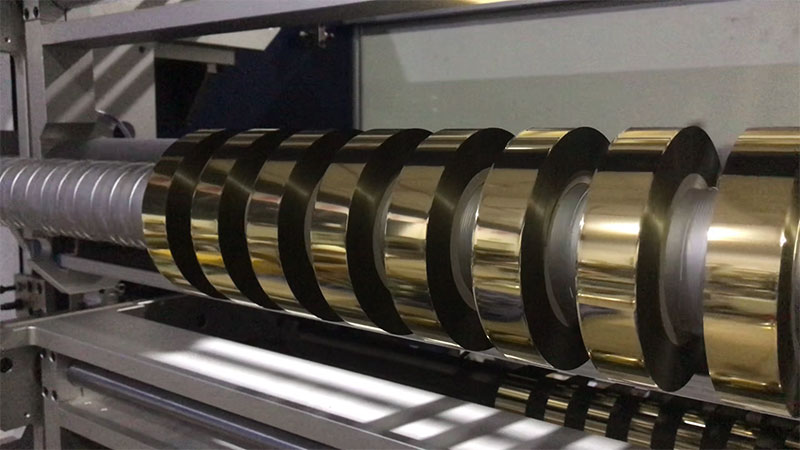
Width determines the rigidity and correction accuracy of the equipment's structure, while speed tests the real-time responsiveness of tension control.
24. September, 2026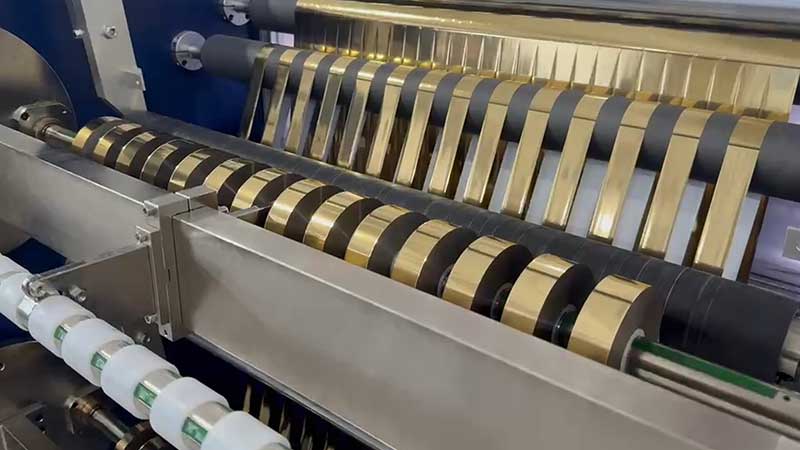
This article provides a current selection framework from four dimensions: material adaptation, core parameters, intelligent configuration, and cost evaluation.
24. September, 2026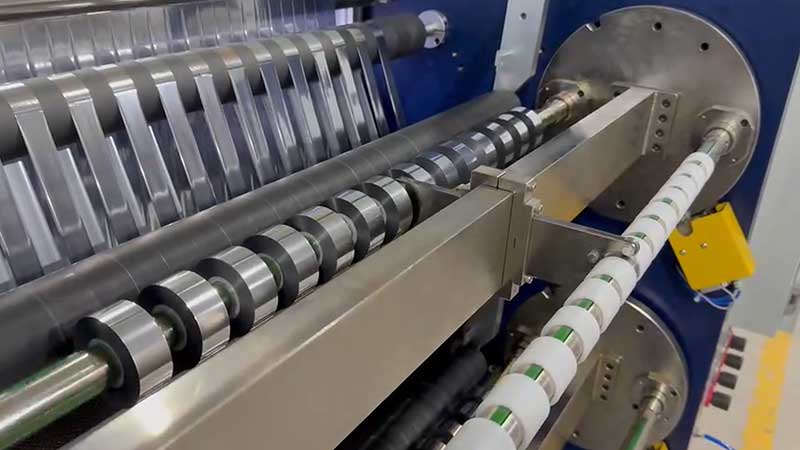
Faced with the wide variety of promotions in the market, buyers only need to focus on five core dimensions to avoid most pitfalls.
24. September, 2026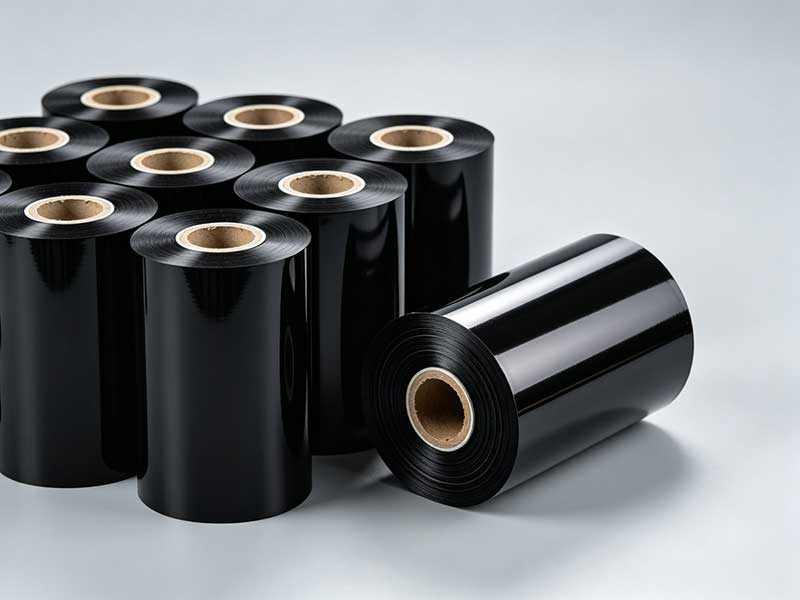
The first watershed in choosing a model isn't speed or brand, but rather — which type of ribbon do you mainly cut?
23. September, 2026
When asking suppliers the following seven questions, the quality of the answers is far more valuable than the numbers on the parameter table.
21. September, 2026


 English
 Deutsch
 Français
 Español
 Português
 日本語
日本語 русский
 한국어
한국어 عربي
عربي ภาษาไทย
 Tiếng Việt
 Italiano