
In the face of a dazzling array of slitting machine models on the market, how to choose the equipment that matches their own production needs has become the key. Here are some specific shopping tips:
The first step is to clarify the characteristics of the processing material, such as paper, film, metal foil, etc., and different materials have different requirements for the tool type, cutting speed and accuracy of the slitter. For example, film slitting requires a focus on tool sharpness and winding flatness, while metal foils require a high-strength tool and stable tension control.

Slitting machine to evaluate production scale and product diversity. High-volume manufacturers may prefer fully automatic, high-speed slitting machines for greater efficiency; For multi-variety and low-volume production, the model with flexible configuration and easy changeover is more suitable. When considering future business expansion, it is also wise to choose equipment with some upgrade potential.

In addition, after-sales service and technical support cannot be ignored. High-quality suppliers should provide comprehensive pre-sales consultation, installation and commissioning and after-sales maintenance services. Examining past cases and customer feedback from suppliers will help judge the reliability and professionalism of the slitter.
Finally, consider cost-effectiveness. On the basis of meeting the performance requirements, compare the quotations and energy consumption of various brands, and choose a cost-effective slitting machine. Timely ROI analysis to ensure that equipment investment is aligned with your long-term goals.
In short, the selection of slitting machine is a decision-making process that comprehensively considers material characteristics, capacity requirements, supplier strength and economy. Meticulous preliminary research combined with actual production planning will guide you to find a slitting solution with high adaptability and excellent efficiency.
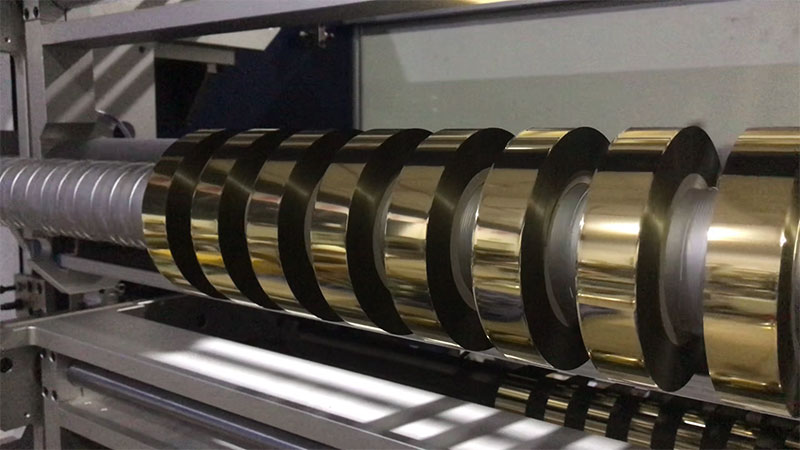
The tension control in the slitting stage directly determines the yield rate of subsequent hot stamping processes.
28. September, 2026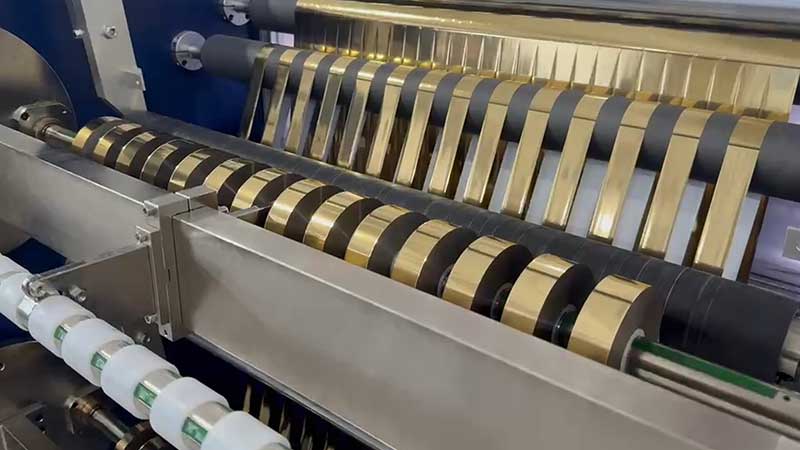
The key to selection is to grasp three parameters that truly determine slitting quality: slitting accuracy, tension control, and tool system.
28. September, 2026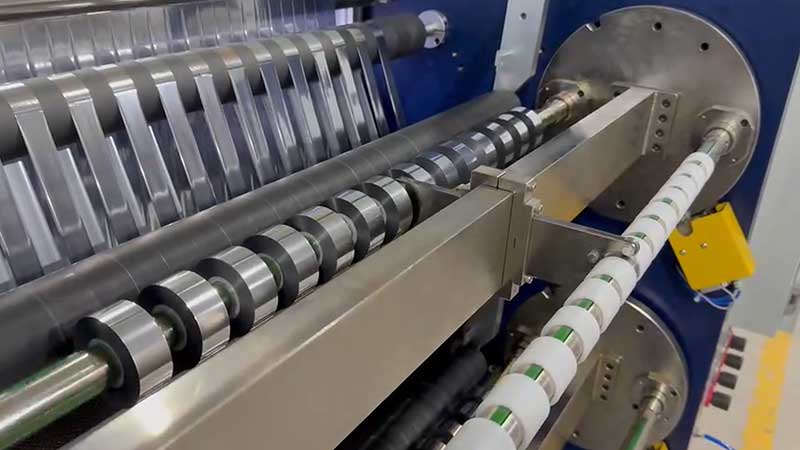
But what truly determines whether a slitting machine is "in sync" is not the absolute value of a single parameter, but the matching logic between width and speed.
28. September, 2026Width determines the rigidity and correction accuracy of the equipment's structure, while speed tests the real-time responsiveness of tension control.
24. September, 2026This article provides a current selection framework from four dimensions: material adaptation, core parameters, intelligent configuration, and cost evaluation.
24. September, 2026


 English
 Deutsch
 Français
 Español
 Português
 日本語
日本語 русский
 한국어
한국어 عربي
عربي ภาษาไทย
 Tiếng Việt
 Italiano