
As a key equipment in modern industrial production, the efficient and accurate slitting ability of film slitting machine directly affects product quality and production efficiency. Here are the key takeaways to unlock its power for high-speed slitting and quality assurance:
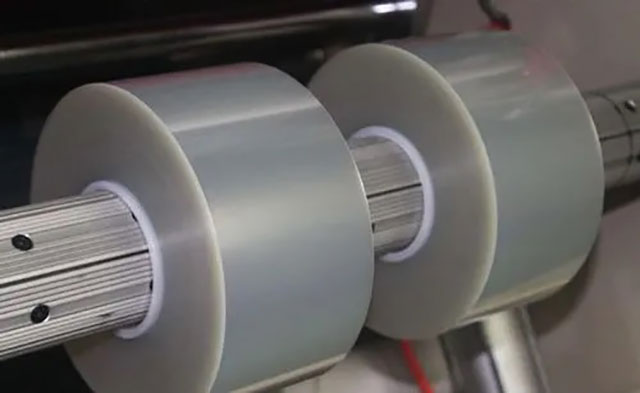
First, the key technology of high-speed slitting
1. High-precision tension control
◦ Closed-loop tension control system (e.g., magnetic particle brake/servo drive) is used to ensure that the tension of the film is constant at high speed slitting and avoid wrinkling or stretching deformation.
◦ Dynamic compensation technology: real-time adjustment of unwinding/rewinding tension to adapt to the elastic differences of different materials (PE, PET, BOPP, etc.).
2. Intelligent turret system
◦ Equipped with pneumatic/hydraulic round knives or diamond cutters, it supports automatic tool adjustment and online sharpening functions to reduce downtime.
◦ The accuracy of the tool pitch is up to ±0.1mm, and it is suitable for slitting ultra-thin films (such as 6μm) without burrs.
3. Servo drive system
◦ Multi-axis servo synchronous control, slitting speed up to 800m/min (depending on the material), smooth acceleration/deceleration process without impact.
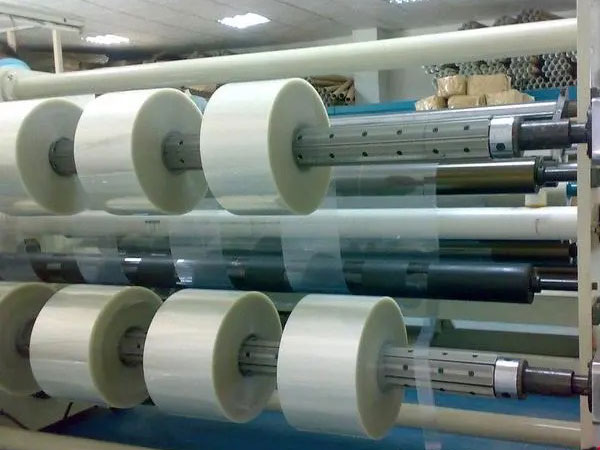
Second, the quality of worry-free safeguard measures
1. In-line defect detection
◦ Integrated CCD vision system or laser scanner to monitor slitting edge quality, scratches, bubbles and other defects in real time, and automatically mark defective products.
2. Environmental control
◦ Clean slitting workshop (temperature and humidity ± 2°C/±5%RH) reduces electrostatic adsorption dust, especially suitable for high-demand scenarios such as optical film and electronic film.
3. Dynamic correction system
◦ EPK photoelectric guiding device ensures the uniformity of the end face of the film roll (within ±0.5mm) to avoid the "serpentine roll" during subsequent rewinding.
Third, operation optimization and maintenance
• Intelligent parameter presetting: call historical process parameters according to material thickness and width to reduce trial cutting waste.
• Preventive maintenance: Lubricate the guide rails regularly and check for tool wear (recommended every 80 hours) to extend the life of the equipment.
• Human-computer interaction upgrade: touch screen + HMI interface, real-time display of slitting speed, tension curve, fault alarm (such as film breakage, abnormal tension).
Fourth, the application scenario is expanded
• New energy field: the slitting of ultra-thin diaphragm (≤10μm) needs to be combined with low-friction guide rollers and dust removal systems.
• Food packaging: FDA-compliant knife material to avoid material contamination.
Suggestion: Priority should be given to models with modular design (e.g., quick-change tool holders, expandable inspection modules) to accommodate future process upgrades. The performance of the high-speed slitting machine depends on the equipment itself, 30% depends on the equipment itself, and 70% depends on the process debugging and daily maintenance, and it is recommended that the professional team carry out periodic calibration.
Through the integration of the above technologies and refined management, the film slitting machine can not only achieve a leap in efficiency, but also control the defective rate below 0.1%, and truly achieve "worry-free quality".
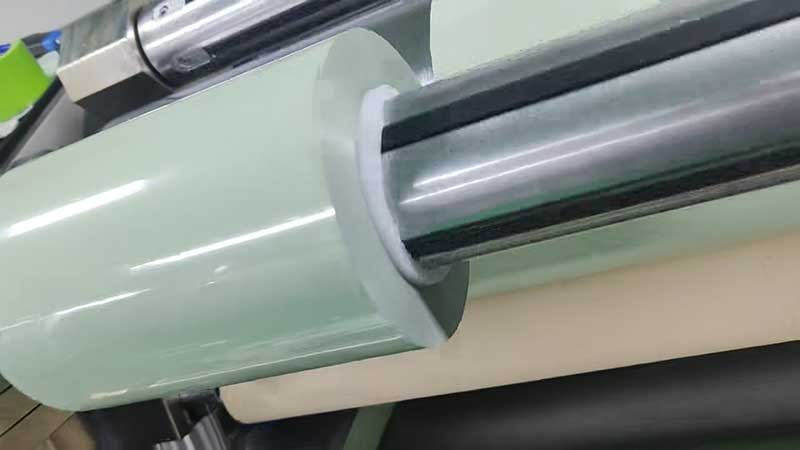
This article outlines a clear selection approach from four dimensions: material adaptation, core technical parameters, efficiency and cost, and supplier selection.
09. September, 2026Balancing speed and precision in film slitting machines is essentially a test of "control capability."
02. September, 2026This article will delve into the current application status, core technologies, and development trends of this equipment in the new energy sector.
28. August, 2026the film slitting machine is the core equipment for slicing wide, large rolls into narrow rolls of specific specifications.
26. August, 2026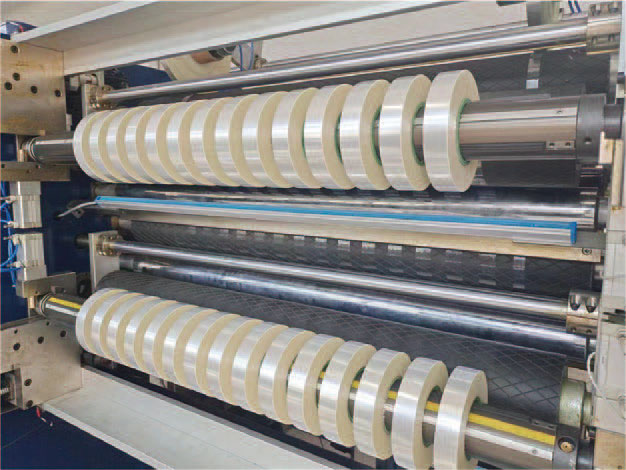
Tension control technology for thin film slitting machines involves interdisciplinary integration of control theory, mechanical design, and material mechanics.
26. August, 2026


 English
 Deutsch
 Français
 Español
 Português
 日本語
日本語 русский
 한국어
한국어 عربي
عربي ภาษาไทย
 Tiếng Việt
 Italiano