
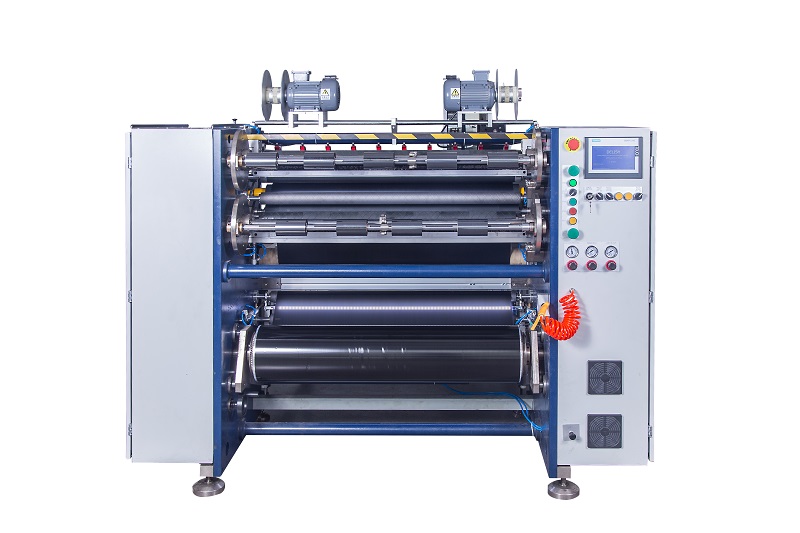
Behind the barcode label production, logistics management and retail industry, there is a crucial piece of equipment that silently supports the operation of the entire system - the ribbon slitting machine. This seemingly simple piece of equipment is tasked with the critical task of precision slitting wide original ribbons into products of specific widths. The quality of its performance directly affects the operating efficiency, print quality, and reliability of the final product of downstream printers. So, how does an excellent ribbon slitting machine achieve efficient and stable operation? What technologies are its reliability based on?
1. Precision is the bone: the ultimate pursuit of mechanical structure and transmission system
Efficient and stable slitting machines are first built on a solid mechanical foundation. The highly rigid body is the first line of defense against vibration and ensures long-term accuracy. The body is cast in high-quality cast iron or special alloys, and the optimized design is optimized with finite element analysis to minimize deformation in high-speed operation.
The precision spindle is the heart of the slitting machine. The radial runout of the spindle usually needs to be controlled at the micron level, which requires high-precision angular contact bearings with adjustable preload force and dynamic balance correction to ensure smooth operation at slitting line speeds of 300-800 m/min. The transmission system has evolved from traditional gear transmission to direct-drive servo motor, eliminating backlash and elastic deformation in the intermediate transmission link, and achieving more direct torque transmission and more accurate synchronous control.
The tension control system is the soul of the slitting process. The excellent system adopts multi-stage closed-loop tension control, from unwinding, transition to winding, and constant tension control with millitonium-level accuracy through high-response magnetic powder clutch and servo motor with tension sensor. Adaptive algorithms adjust torque in real-time based on roll diameter changes, ensuring a smooth transition from full to empty roll tension curves and avoiding ribbon wrinkling, breakage, or slacking.
2. Intelligence as the soul: the wisdom empowerment of control systems and algorithms
The efficiency of modern ribbon slitting machine is inseparable from the deep empowerment of intelligent control systems. Based on PLC or industrial PC, the control core integrates motion control, tension algorithm, human-computer interaction and data management modules.
The intelligent tool rowing system allows for quick setting of slitting width and tool position through the touch screen, and the servo-driven tool holder can be automatically positioned with an accuracy of ±0.05 mm, reducing the size change time from hours to minutes of traditional manual adjustment. The introduction of visual inspection systems is a revolutionary advancement. Industrial cameras can monitor the quality of slitting edges online, detect minor defects (such as uneven coating, foreign objects), and automatically mark or eliminate defective sections, changing quality control from "spot checks after the fact" to "full inspections online".
Preventive maintenance systems greatly improve equipment availability by continuously monitoring key parameters (such as spindle vibration spectrum, motor current harmonics, bearing temperature), using big data analysis to predict potential faults, and provide early warning before equipment performance declines.
3. Process as the pulse: the slitting process is deeply compatible with the adaptability of the material
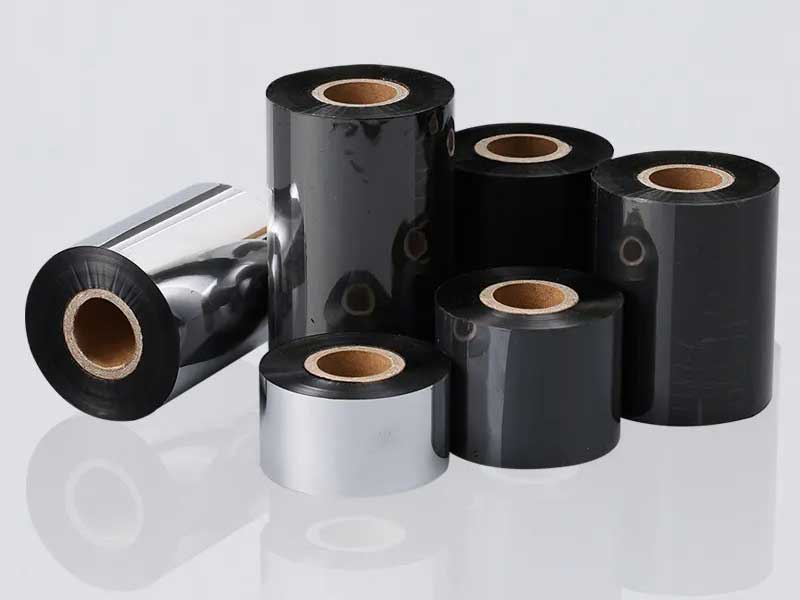
Efficient and stable slitting must be closely matched to the characteristics of the ribbon material. Ribbons are usually composed of a polyester film substrate and a thermal transfer coating (wax-based, hybrid-based, resin-based), and the physical properties (modulus of elasticity, coefficient of friction, brittleness) vary significantly between different formulations.
For different materials, the slitting process needs to be finely adjusted. The choice of blade is particularly critical: for wax-based ribbons that are prone to debris, nano-coated blades should be used to reduce adhesion; For high-strength resin-based ribbons, a higher hardness tool is required. Fine adjustment of the slitting angle (typically 20-30°) optimizes section quality and reduces burrs. The precise control of winding pressure and taper avoids defects such as "chrysanthemum pattern" of the core or "overlapping edges" of the outer layer.
Environmental stability is also an important part of reliability. Constant temperature and humidity workshops (such as 23±2°C, 50±5%RH) can reduce the expansion and contraction of materials due to temperature and humidity changes, ensuring long-term consistency of slitting dimensions. The standard electrostatic elimination system avoids dust adsorption and material adhesion.
4. Reliability-based: design verification and full life cycle management
Reliability is not tested, it is designed. The best slitting machine manufacturers follow a rigorous reliability design process: from FMEA (Failure Mode and Effects Analysis) to identifying potential risk points, to accelerated life testing to simulate years of wear, to HALT (High Accelerated Life Testing) to find design limits.
In the selection of key components, although the cost of bearings, guide rails and servo systems of internationally renowned brands is higher, the life and accuracy stability brought by them are several times that of ordinary components. The modular design not only facilitates quick replacement and maintenance, but also reduces the impact of local faults on the whole machine through functional isolation.
Full lifecycle data management is becoming the new standard. Each device has a unique digital identity that records the entire data link from assembly, commissioning, operation to maintenance. This data is not only used to optimize subsequent designs, but also to provide users with personalized maintenance recommendations based on actual usage loads.

Conclusion: Defining the future in the balance between precision and efficiency
The efficiency and stability of the ribbon slitting machine is a deep integration of mechanical precision, intelligent control, process materials and reliability engineering. It is no longer a simple cutting machine, but an intelligent production unit that combines material science, precision machinery, automatic control and industrial Internet of Things technology.
With the deepening of Industry 4.0, the future ribbon slitting machine will further evolve into an agent of "adaptive, self-optimizing, and self-maintenance". Through deeper process mechanism modeling, richer material database, and more powerful edge computing capabilities, the equipment will be able to automatically identify material batch differences and adjust parameters to maintain optimal and stable output in the midst of changes.
For users, choosing an efficient and stable ribbon slitting machine is not only about purchasing equipment but also about introducing a production logic that can stand the test of time - while pursuing slitting efficiency, adhering to the commitment to every millimeter of ribbon quality, in the balance between speed and precision, defining a clear and reliable future in the barcode world.
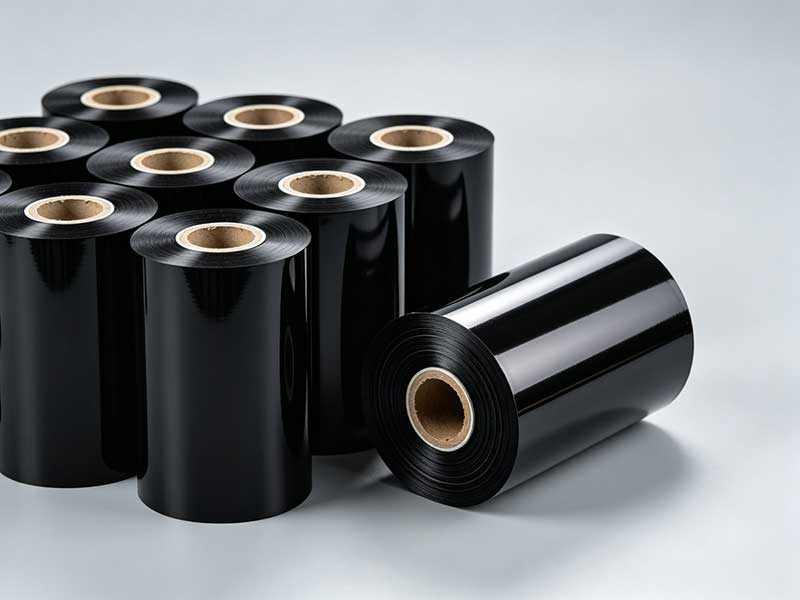
The widespread adoption of fully automatic ribbon slitting machines is changing this situation. Its core value can be summed up in six words: efficient, stable, and labor-saving.
22. October, 2026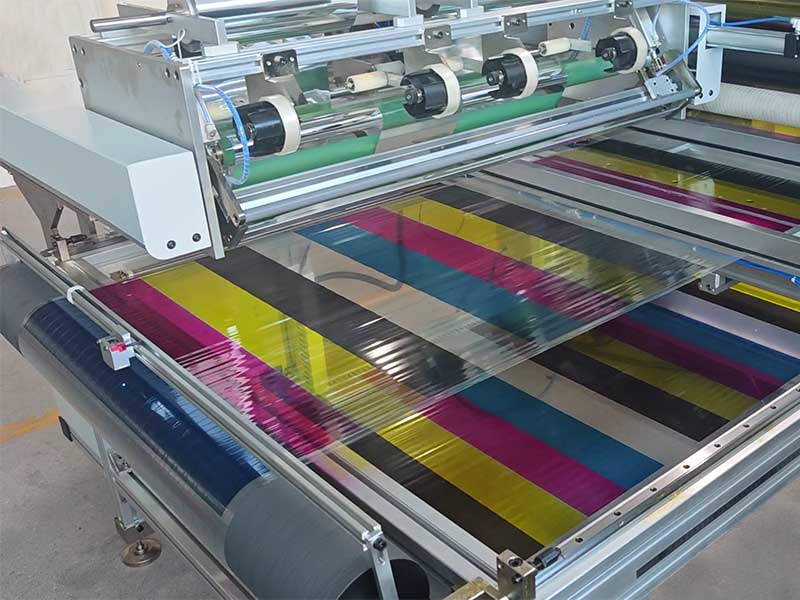
The color ribbon slitting machine is mainly used for wide roll slitting and rewinding of materials such as card printer color ribbons and thermal transfer ribbons.
21. October, 2026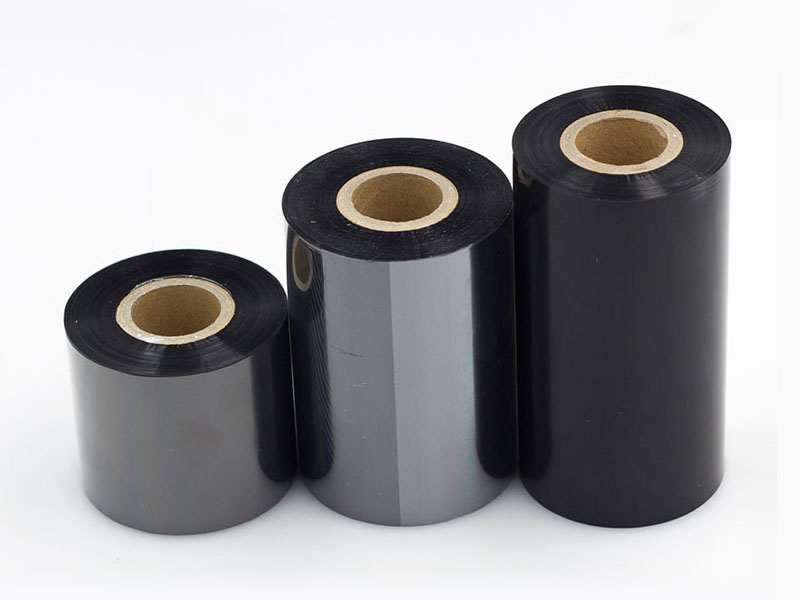
This article will break down the technical core of this function from four dimensions: signal detection, control logic, shutdown strategy, and precision calibration.
19. October, 2026The value of the automatic correction function lies in incorporating this runaway variable into a precise closed loop, shifting slitting operations from "post-event selection" to "real-time self-heali
19. October, 2026This paper proposes a practical efficiency improvement plan from three dimensions: downtime management, switching optimization, and tension upgrade.
19. October, 2026


 English
 Deutsch
 Français
 Español
 Português
 日本語
日本語 русский
 한국어
한국어 عربي
عربي ภาษาไทย
 Tiếng Việt
 Italiano