
In the modern film processing industry, equipment reliability is directly related to production efficiency and product quality. As a key equipment in the film processing production line, the continuous trouble-free operation time of the film slitting machine has become an important indicator to measure the technical level of the enterprise. Achieving continuous 1,000 hours of trouble-free operation requires not only systematic technical upgrades, but also all-round innovation from design concept to maintenance strategy.
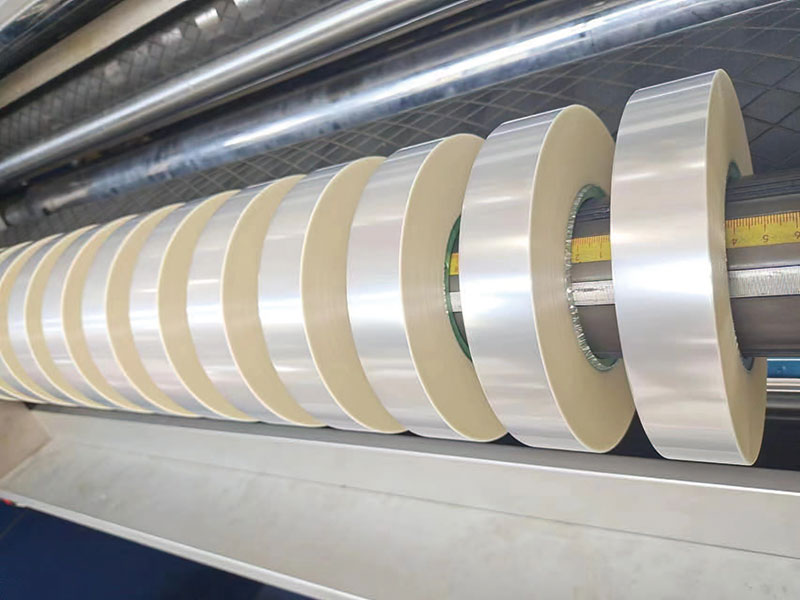
Current situation analysis: common failure points of film slitting machines
The main faults of the current film slitting machine are concentrated in the following aspects:
1. Tension control system instability: resulting in uneven film stretching and edge breakage
2. Cutting system wear: cutting quality issues caused by blade passivation and bearing failure
3. Electrical system failure: sensor drift, PLC program abnormality
4. Mechanical structure fatigue: shaft system deviation and frame deformation caused by long-term operation
5. Cleaning System Failure: Dust accumulation affects sensor accuracy and product quality
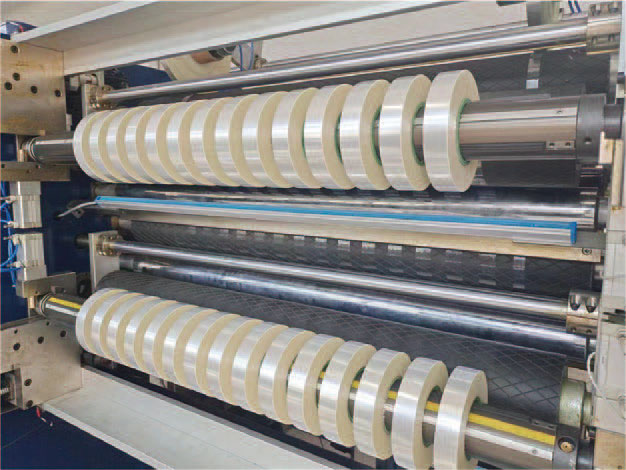
The four technical pillars of reliability upgrades
1. Build a predictive maintenance system
The key to achieving 1,000 hours of trouble-free operation is moving from "post-failure repair" to "predictive maintenance". By installing vibration sensors, temperature monitoring points and visual inspection systems, equipment operation data is collected in real time. By analyzing this data using machine learning algorithms, potential issues such as bearing wear and alignment deviations can be identified in advance. A leading company reduced unplanned downtime by 87% by deploying 32 monitoring points on the slitting machine.
2. Upgrade the material and design of key components
• Cutting system innovation: Nano-coated blades increase life by more than 3 times; Air bearings are used to support the tool shaft and eliminate mechanical wear
• Tension control system optimization: Introduce a full closed-loop magnetic particle brake/clutch system, shorten the response time to milliseconds, and achieve a tension control accuracy of ±0.5%
• Improved guide roller system: The use of carbon fiber composite rollers reduces weight by 40%, improves dynamic balancing performance, and reduces film jitter
3. Intelligent control system integration
The new generation of film slitting machine adopts a distributed control system architecture, which deeply integrates the main control PLC with the intelligent modules of each subsystem. Seamless communication between devices is achieved through the OPC UA protocol, enabling subsystems such as tension control, speed synchronization, and defect detection to work together. The system's built-in self-diagnostics identify more than 95% of potential faults and provide clear recommendations for how to deal with them.
4. Environmental control and clean technology
Film slitting is extremely sensitive to the production environment. Achieving 1,000 hours of continuous operation requires:
• Establish a fully enclosed clean production area to control the temperature and humidity within the range of ±1°C and ±3%RH
• Cleaning system with a combination of ion air knife and vacuum adsorption ensures dust-free film surfaces
• Modular quick-clean design reduces routine maintenance time by 60%
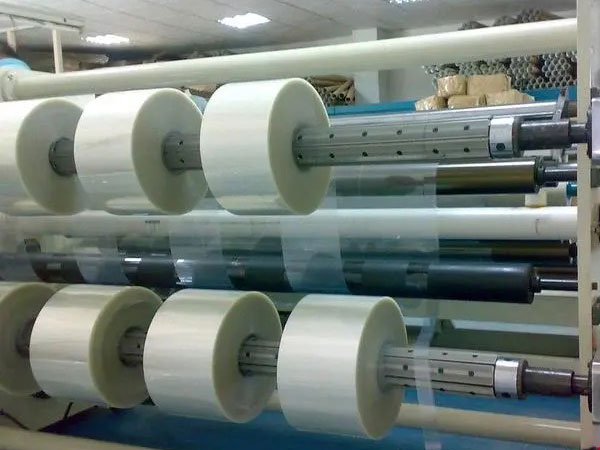
Implementation path: Phased reliability improvement plan
Phase 1 (foundation reinforcement, 0-3 months): Conduct a comprehensive assessment of existing equipment, replace key components that have expired, and establish a basic data acquisition system.
Phase 2 (System Optimization, 4-9 months): Upgrade the electrical control system, install predictive maintenance sensor networks, and train the maintenance team to master data analysis skills.
The third stage (comprehensive upgrade, 10-18 months): Implement the upgrade of key components and materials, integrate the intelligent control system, and establish a complete reliability management system.
Case verification: successful transformation from theory to practice
A domestic high-end film manufacturer has achieved remarkable results by upgrading the above system of the slitting machine:
• Mean trouble-free uptime increased from 350 hours to 1200 hours
• Product excellence rate increased from 93.5% to 98.7%
• 18% reduction in combined energy consumption
• 42% reduction in maintenance costs
Future prospects: deep integration of intelligence and reliability
With the development of industrial IoT and artificial intelligence technology, the reliability of film slitting machines will enter a new stage. Future equipment will have:
• Self-healing function: automatically adjust parameters to compensate for minor wear of components
• Adaptive learning: Automatically optimizes operating parameters based on different film characteristics
• Cloud collaboration: Data sharing across multiple devices to form swarm intelligence
Conclusion
Achieving 1,000 hours of continuous trouble-free operation of film slitting machines is not an unattainable goal, but a realistic indicator that can be achieved through systematic technology upgrades. This requires companies to move from reactive maintenance to proactive prevention, from single component improvement to system optimization, and from experience-driven to data-driven. In today's increasingly fierce competition in the film processing industry, equipment reliability is not only a technical issue, but also an important embodiment of the core competitiveness of enterprises. Only by continuously pursuing higher reliability standards can enterprises move forward steadily on the road of high-quality development.
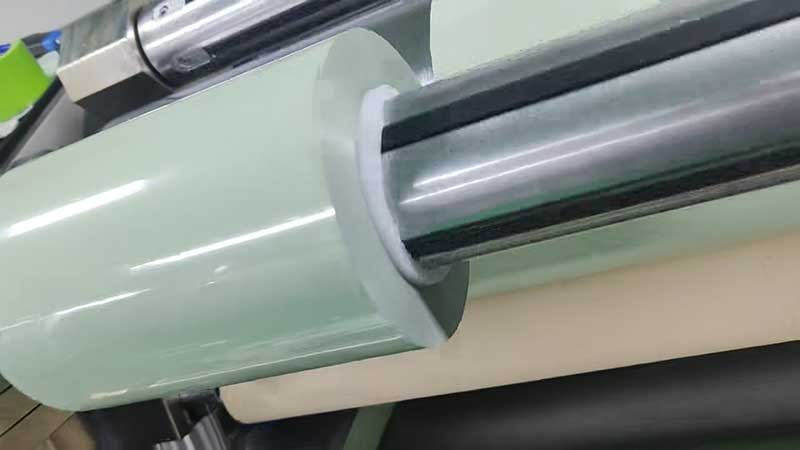
This article outlines a clear selection approach from four dimensions: material adaptation, core technical parameters, efficiency and cost, and supplier selection.
09. September, 2026Balancing speed and precision in film slitting machines is essentially a test of "control capability."
02. September, 2026This article will delve into the current application status, core technologies, and development trends of this equipment in the new energy sector.
28. August, 2026the film slitting machine is the core equipment for slicing wide, large rolls into narrow rolls of specific specifications.
26. August, 2026Tension control technology for thin film slitting machines involves interdisciplinary integration of control theory, mechanical design, and material mechanics.
26. August, 2026


 English
 Deutsch
 Français
 Español
 Português
 日本語
日本語 русский
 한국어
한국어 عربي
عربي ภาษาไทย
 Tiếng Việt
 Italiano