
In industrial manufacturing, efficiency and precision are always key indicators of equipment advancement. With the advent of the era of intelligent manufacturing, traditional film slitting machines are undergoing a profound transformation from "mechanical execution" to "intelligent collaboration". The intelligent control design of the new generation of film slitting machine is not only a simple optimization of technical parameters, but also a comprehensive innovation in ease of operation, production efficiency and system reliability.
1. Pain points and challenges of traditional slitting operations
The operation of traditional film slitting machines usually relies on the experience accumulation of operators, and faces multiple challenges: cumbersome and complex parameter setting, and the production change adjustment takes too long; Tension control relies on manual experience, which is prone to tensile deformation of materials. Quality control mainly relies on post-event testing, with a high waste rate; Fault diagnosis is difficult, and downtime is long. These pain points directly affect production efficiency and product quality stability.
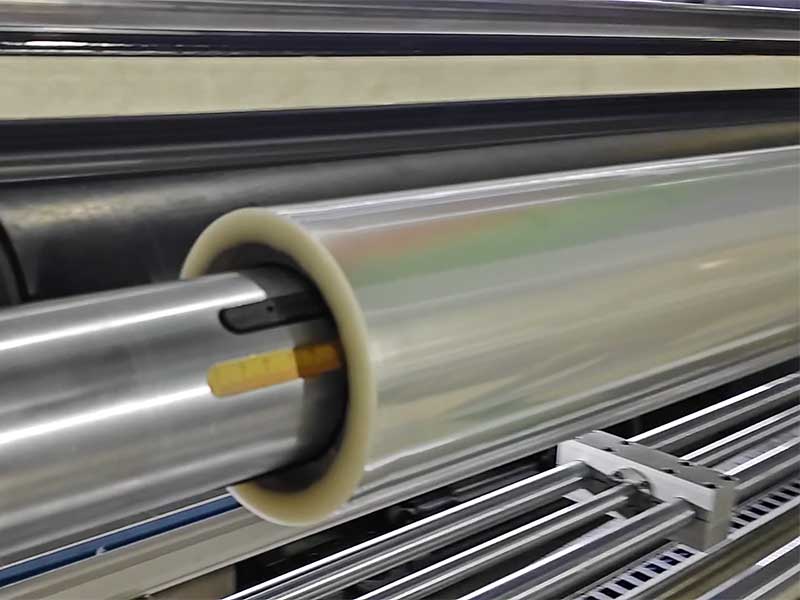
2. The core innovation of intelligent control design
1. Integrated human-computer interface
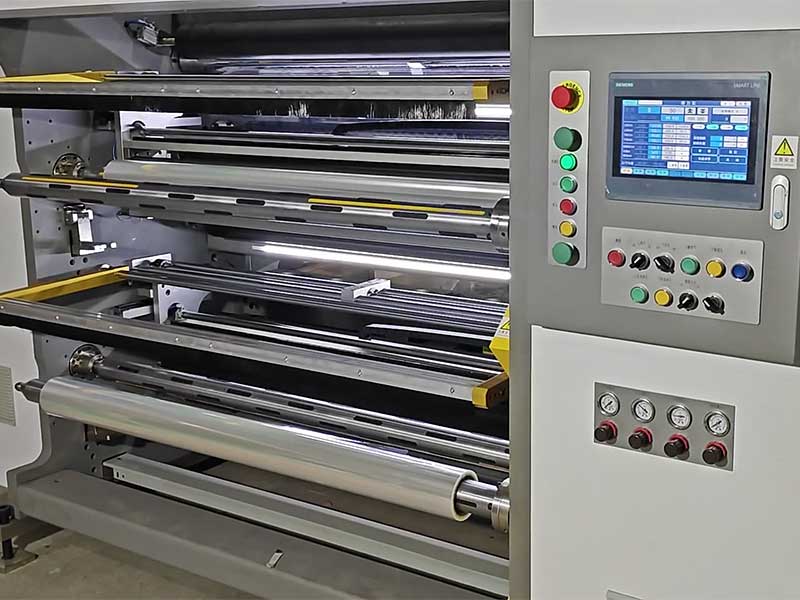
The new generation of film slitting machines uses a full-touch high-definition industrial-grade flat panel to integrate functions that were originally scattered across multiple physical buttons and gauges into a unified interface. Graphical operation guidance, multilingual support, gesture control and other designs significantly reduce the learning curve for operators. The preset process recipe function allows the full parameter combination to be recalled with one click, reducing changeover time by more than 60%.
2. Adaptive intelligent control system
The adaptive control system based on machine learning algorithms can automatically optimize the slitting parameters according to the characteristics of the film material (thickness, elasticity, coefficient of friction, etc.). The system dynamically adjusts the unwinding speed, tension control curve and tool pressure by monitoring tension changes, tool wear and material deformation data in real time during the slitting process, and realizes the intelligent operation of "setting is optimal".
3. Predictive maintenance and fault diagnosis
The intelligent control system has a large number of sensor networks built into it, continuously collecting equipment operation data. By analyzing parameters such as vibration frequency, temperature changes, and energy consumption fluctuations, the system can warn of potential faults in advance and provide detailed diagnostic reports and maintenance guidance when faults occur. This feature reduces unplanned downtime by approximately 40% and significantly improves equipment utilization.
4. Remote monitoring and collaborative operation
Based on the industrial Internet architecture, the new generation of slitting machines supports remote monitoring and operation. Managers can check the production status in real time through mobile terminals, and the expert technical support team can diagnose system problems remotely. At the same time, data sharing and collaborative scheduling between multiple devices realize the intelligent and optimal allocation of production resources.
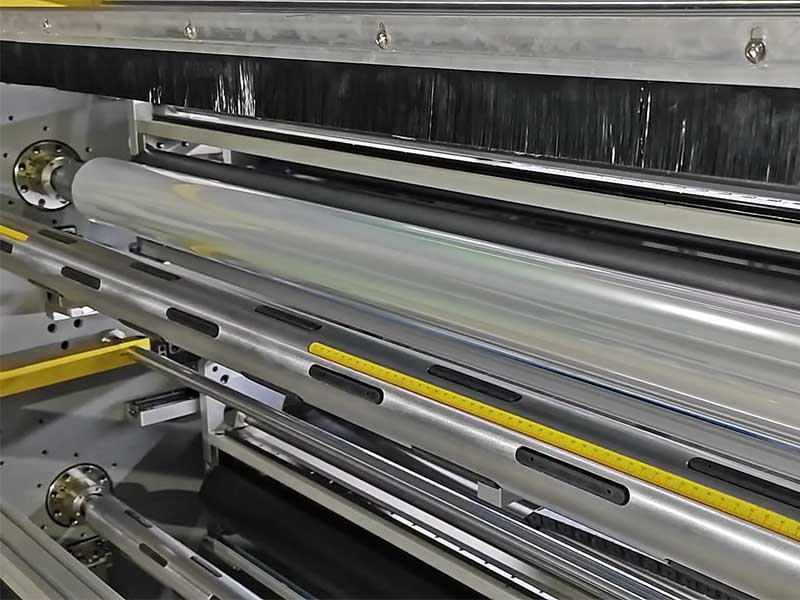
3. The concrete embodiment of operational convenience
Streamlined operational processes
Simplified from a complex multi-step operation to a three-step process: select the material type→ set target specifications→ start production. All parameters optimization, equipment calibration, and quality control are automatically completed by the intelligent system.
Intuitive visual feedback
The 3D simulation interface shows every step of the slitting process in real time, highlighting potential problem areas. The quality inspection system is seamlessly integrated with the main control interface, displaying key indicators such as slitting edge quality and winding neatness in real time.
Personalized operation configuration
The system allows different operators to save personalized operation preferences and work interface layouts, and ensures the standardization and safety of operations through the permission management system.
4. Practical application value and industry impact
After a plastic film manufacturing company introduced a new generation of intelligent slitting machine, the production data showed that the training time for operators was shortened from the original 3 weeks to 3 days; the average changeover time has been reduced from 45 minutes to 15 minutes; Material waste rate reduced by 28%; Equipment Overall Effectiveness (OEE) increased by 22%. These improvements not only reduce labor costs, but also significantly increase the flexibility of enterprises to respond quickly to the market.
The impact of intelligent control design has gone beyond the scope of a single device and is promoting the collaborative upgrading of the entire industrial chain. As a key link in film processing, the intelligence level of slitting machine directly affects the product quality and production efficiency of downstream application fields (such as packaging, electronics, new energy, etc.).
5. Future prospects
As edge computing, digital twins, and augmented reality (AR) technologies mature, the next generation of film slitting machines will achieve a higher level of intelligence. Through AR glasses, operators can directly see the working status and virtual operation guidance inside the equipment. Digital twin technology can pre-verify production parameters in a virtual environment to achieve "zero-risk" trial production; AI algorithms will be able to autonomously optimize production schedules and process parameters based on historical data and market demand forecasts.
Epilogue
The intelligent control design of the new generation of film slitting machine represents the transformation of industrial equipment from "tool" to "partner". At the heart of this shift is a human-centric design philosophy – reducing operational complexity through technical means, freeing operators from repetitive labor and focusing on higher-value process optimization and innovation. The innovation of ease of operation is not only a reflection of technological progress, but also an inevitable choice for the manufacturing industry to develop in a more intelligent, efficient and humanized direction. In the tide of intelligent manufacturing, those enterprises that take the lead in embracing this change will take the lead in future market competition and lead the new direction of industry development.
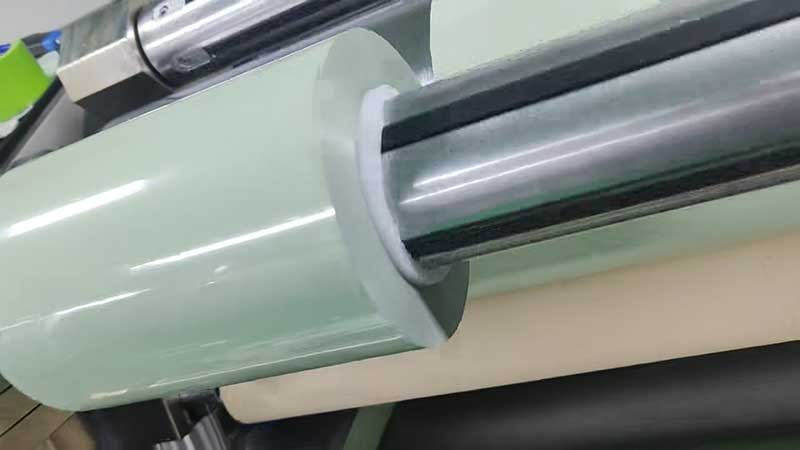
This article outlines a clear selection approach from four dimensions: material adaptation, core technical parameters, efficiency and cost, and supplier selection.
09. September, 2026Balancing speed and precision in film slitting machines is essentially a test of "control capability."
02. September, 2026This article will delve into the current application status, core technologies, and development trends of this equipment in the new energy sector.
28. August, 2026the film slitting machine is the core equipment for slicing wide, large rolls into narrow rolls of specific specifications.
26. August, 2026
Tension control technology for thin film slitting machines involves interdisciplinary integration of control theory, mechanical design, and material mechanics.
26. August, 2026


 English
 Deutsch
 Français
 Español
 Português
 日本語
日本語 русский
 한국어
한국어 عربي
عربي ภาษาไทย
 Tiếng Việt
 Italiano