
In the realm of precision in manufacturing, every millimeter of error can have a ripple effect – from production line stoppages to customer complaints to wasted resources. Especially in the seemingly mundane but crucial industry of ribbon manufacturing, traditional manual slitting operations have long faced efficiency bottlenecks and precision challenges. However, the emergence of automated ribbon slitting machines is quietly changing this situation.
Limitations of traditional manual slitting
For a long time, ribbon slitting relied primarily on the operation of skilled workers. Workers need to manually measure, mark, adjust machine parameters, and then cut. This process is not only time-consuming and labor-intensive, but also inevitably fraught with problems:
• Unstable accuracy: Even the most experienced operators can struggle to ensure that the cutting accuracy is consistent from batch to batch and roll
• Inefficiency: Manual adjustments and measurements significantly extend production cycles
• Material waste: Human error often leads to cutting errors, resulting in raw material waste
• Safety hazards: Cutting equipment that rotates at high speeds poses a potential hazard to operators
• High training costs: Developing a skilled operator requires months or even years of practice
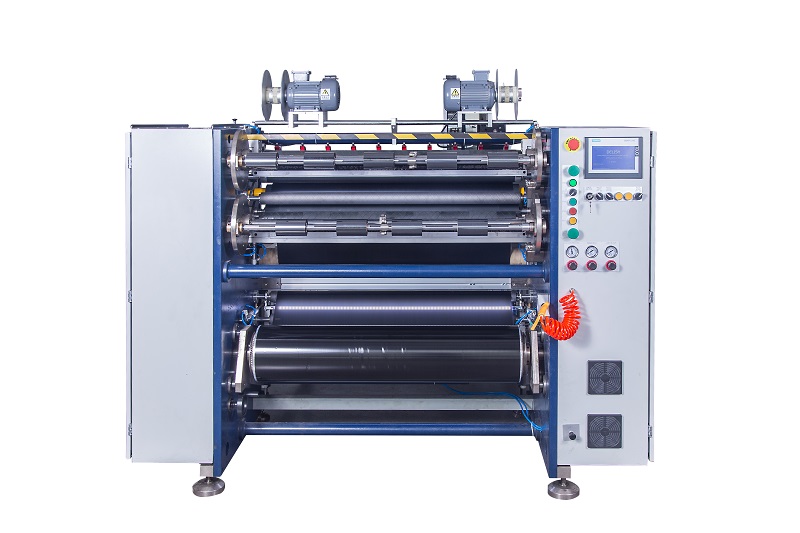
Breakthroughs in automation technology
Automated ribbon slitting machines fundamentally solve these problems by integrating several advanced technologies:
1. High-precision sensor system
Modern slitting machines are equipped with laser measurement and image recognition systems, capable of detecting the position and state of materials with an accuracy of 0.01 mm, far exceeding the human eye's ability to discriminate.
2. Intelligent control system
The control system based on PLC (Programmable Logic Controller) and AI algorithms can automatically adjust the cutting parameters to adapt to different materials and thicknesses of ribbons.
3. Adaptive error correction mechanism
The machine monitors the cutting process in real-time and automatically adjusts once any deviations are detected, ensuring that every knife is accurately in place.
4. Integrated production process
From material rolling, tension control, cutting to finished product collection, the entire process is automated, reducing human intervention.
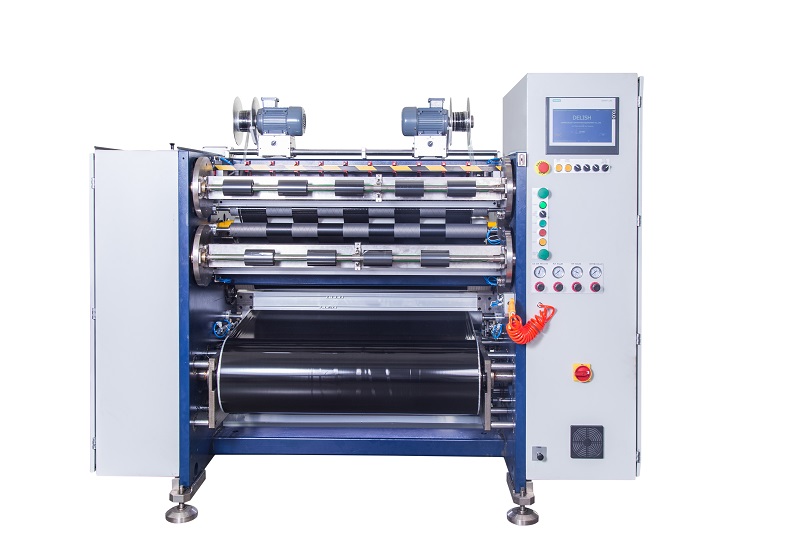
Automation is transformative
Precision revolution
After the introduction of automated slitting machines in a ribbon manufacturing enterprise, the product accuracy has increased from ±0.5mm to ±0.05mm for manual operation, and the pass rate has increased from 92% to 99.8%.
Efficiency leaps
The same production task, which originally required 3 workers to complete in 8 hours, can now be completed in 4 hours with only 1 operator monitoring, and the efficiency has increased by nearly 6 times.
Cost optimization
The material waste rate has been reduced from 5% to 0.3%, saving the company millions of dollars each year. At the same time, the dependence on highly skilled operators is reduced, and labor costs are reduced.
Security upgrades
Operators no longer need to have direct contact with the cutting area, reducing the accident rate by 90%.
Beyond the profound impact of numbers
The significance of automated slitting machines goes far beyond efficiency and precision data. It's reshaping the entire industry ecosystem:
The redefinition of quality standards
When "near-perfect" cutting becomes the norm, customer expectations for products also increase, driving the upward migration of quality standards across the industry.
Increased design freedom
High-precision slitting enables more complex and detailed ribbon designs, opening up new spaces for product innovation.
Sustainability contribution
Reducing material waste directly lowers resource consumption and carbon emissions, making the production process more environmentally friendly.
Transformation of skills demand
The shift in the Operator role from "Executive" to "Supervisor" and "Problem Solver" facilitates upskilling in the Workforce.
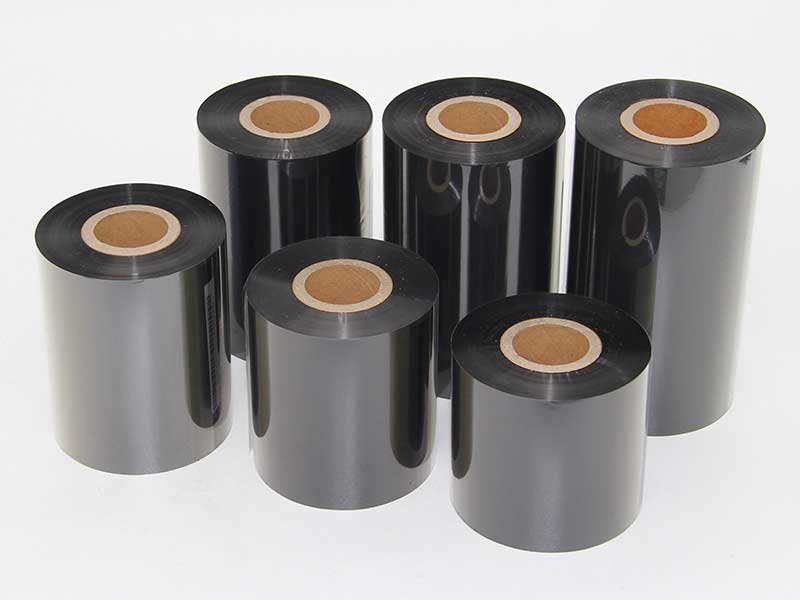
Future outlook
With the further development of IoT, big data and artificial intelligence technology, the next generation of ribbon slitting machines will be more intelligent:
• Predictive maintenance: Predict failures by analyzing machine data to avoid unplanned downtime
• Adaptive Learning: The system learns from historical data to optimize, continuously improving cutting accuracy
• Cloud collaboration: Multiple devices share optimal parameters through the cloud to achieve global optimization
• Flexible production: Quickly switch between different specifications of products to meet the needs of small-batch customization
Epilogue
The automated ribbon slitting machine is not only the story of a machine replacing manual labor, but also the epitome of the transformation of the manufacturing industry to intelligence and precision. It reduces not only manual operation errors, but also the limitations of traditional production modes; It not only improves cutting accuracy, but also the technical benchmark and competitiveness of the entire industry.
In the new era of pursuing ultimate precision manufacturing, the automated ribbon slitting machine is cutting out a grand blueprint for industrial upgrading with millimeter-level focus, contributing its own precise strength to the transformation from "Made in China" to "Made in China".

The widespread adoption of fully automatic ribbon slitting machines is changing this situation. Its core value can be summed up in six words: efficient, stable, and labor-saving.
22. October, 2026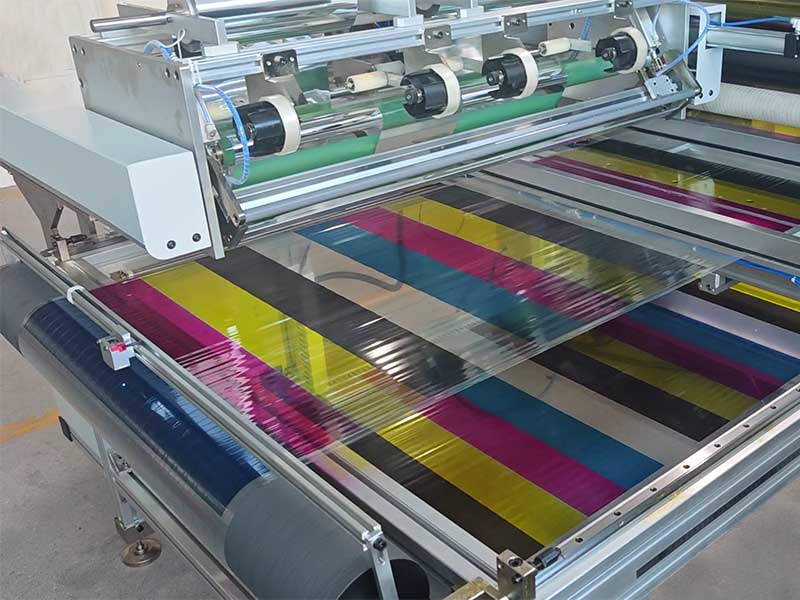
The color ribbon slitting machine is mainly used for wide roll slitting and rewinding of materials such as card printer color ribbons and thermal transfer ribbons.
21. October, 2026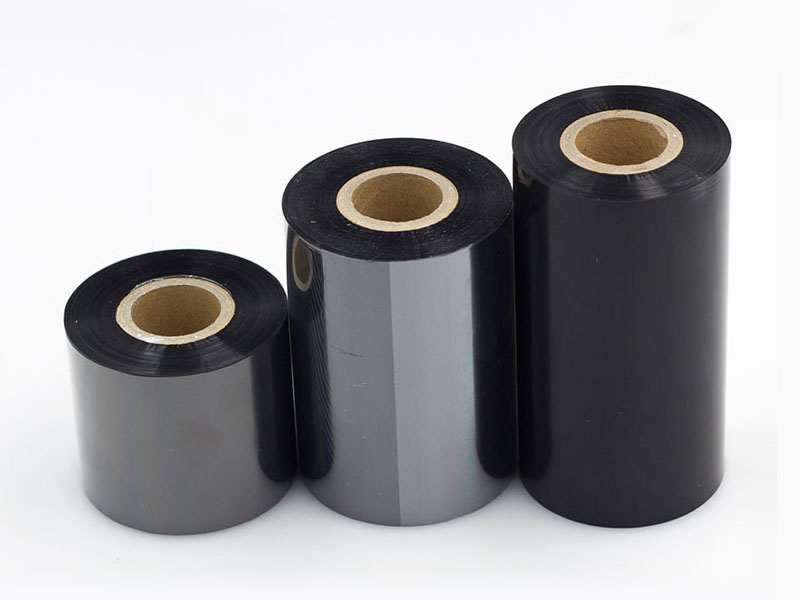
This article will break down the technical core of this function from four dimensions: signal detection, control logic, shutdown strategy, and precision calibration.
19. October, 2026The value of the automatic correction function lies in incorporating this runaway variable into a precise closed loop, shifting slitting operations from "post-event selection" to "real-time self-heali
19. October, 2026This paper proposes a practical efficiency improvement plan from three dimensions: downtime management, switching optimization, and tension upgrade.
19. October, 2026


 English
 Deutsch
 Français
 Español
 Português
 日本語
日本語 русский
 한국어
한국어 عربي
عربي ภาษาไทย
 Tiếng Việt
 Italiano