
In the production process of thermal transfer ribbons, slitting is a critical process that determines capacity, yield, and lead time. Many enterprises encounter the problems of long-term low efficiency of slitting machines, slow order change, and high scrap rate, and often consider replacing equipment first, but in fact, most bottlenecks can be broken through systematic optimization.
The following is a feasible direction for improving the efficiency of ribbon slitting machine from the four dimensions of equipment, process, operation and management.
1. Can't the slitting speed go up? Let's look at the tension control of the retraction and unwinding first
The efficiency of the ribbon slitting machine is low, and the most direct manifestation is "not fast opening". Many equipment is designed to have a maximum speed of 300m/min or even higher, but it can only run to 100-150m/min in actual operation, and no matter how high it is, there will be wrinkles, deviations, and uneven end faces.
The reason is often in the tension control system:
• Unstable damping of the unwinding shaft: The mechanical brake or magnetic particle brake is aging, resulting in the unwinding tension fluctuating between large and small, and the equipment can only slow down to maintain stability.
• Improper setting of winding taper tension: With the increase of the coil diameter, the winding tension does not decrease proportionally, resulting in internal tightness and external looseness or internal looseness and external tightness, which affects the operation stability.
• Slow response of tension sensors: The analog tension control system of old equipment lags in response and cannot adapt to dynamic changes during high-speed slitting.
Direction of improvement: check brake/clutch wear, calibrate tension sensors regularly; If possible, it can be upgraded to a closed-loop automatic tension control system, and with low inertia guide rollers, it can usually increase the stable operating speed by 30%-50%.
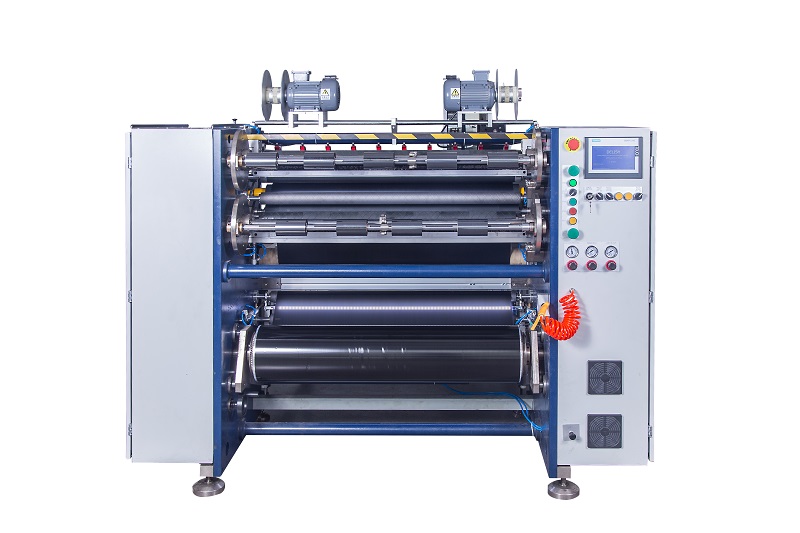
2. Does it take too long to change orders? Optimize the tool holder and tool arrangement method
Ribbon slitting requires frequent replacement of slitting specifications, and when switching orders of different widths and diameters, tool change and tool rowing time are the core factors affecting the comprehensive efficiency.
Common Inefficient Scenarios:
• It takes 30-40 minutes to change a specification, most of which is spent disassembling and assembling the blade, measuring the tool spacing, and adjusting the angle.
• Blades are troublesome to replace after wear, and even require special tools to disassemble and assemble multiple screws.
Improvement direction:
• Pneumatic or quick-lock tool holder for tool-free blade positioning.
• Introduce CNC tool rowing system, the tool holder automatically moves to the set position after entering the slitting width, and the tool rowing time can be shortened from 20 minutes to 2-3 minutes.
• Two sets of tool sets, external pre-arranged knives, and the whole set is replaced.
3. Deviation, uneven end face? Check the accuracy of correction and guide rollers
The deviation of the ribbon during the slitting process will lead to an increase in leftovers, excessive slitting width, and even scrapping of the whole roll. Efficiency losses often come not from downtime, but from repeated adjustments and scrap rejection.
Common Causes:
• Reduced sensitivity of ultrasonic/photoelectric guidance sensors or unreasonable detection point positions.
• Guide roller parallelism exceeds the standard: After long-term use, the bearings at both ends of the guide roller wear out, resulting in lateral drift of the ribbon during operation.
• Surface wear or viscosity of guide rollers: increase friction unevenness.
Improvement direction: check whether the correction system is sensitive every month, clean the sensor lens; Use a level to check the parallelism of the guide rollers; Guide rollers that are easy to adhesive can be replaced with anti-stick coatings or ceramic guide rollers with a low coefficient of friction.
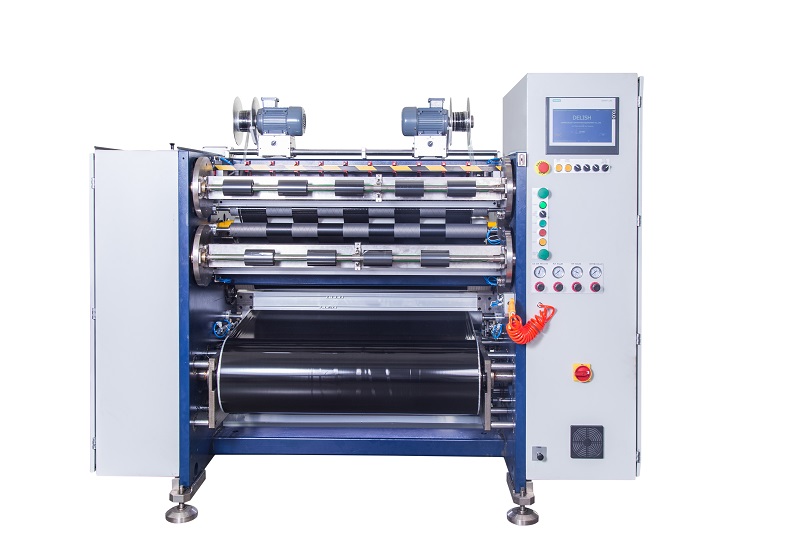
4. Uneven winding end face? The coiling method should match
The winding quality after ribbon slitting directly affects the downstream printer experience and the continuous operation efficiency of this process. When the end face is severely uneven, the equipment will automatically slow down or alarm to stop.
The core lies in the choice of winding method:
• Center coiling is suitable for thicker ribbons with better stiffness, but thin ribbons are prone to inner wrinkles.
• Surface coiling is more friendly to thin materials, but requires proper pressure rollers and contact pressure regulation.
Improvement direction: according to the thickness and type of ribbon substrate mainly processed, choose the appropriate winding method; For production lines with variable specifications, it is recommended to use the combined winding of center + surface, which can be quickly switched according to the material characteristics.
5. Low degree of automation? Complementary accessibility
Many old-fashioned ribbon slitting machines rely on manual operation, from film threading, meter counting to rolling and labeling, which requires manual intervention, which is not only slow, but also varies from person to person.
Automation upgrades to consider:
• Automatic film threading/film guide system: reduces film threading time after each reel change.
• Automatic meter counting and fixed length stop: Precise control with frequency converter to avoid over-cutting or under-cutting.
• Automatic unwinding and unwinding device: reduce manual rewinding and handling time.
• Automatic printing and application of barcodes/labels: Interfaces with production systems to reduce manual marking and verification.
These transformations are not very expensive, but they can significantly reduce the auxiliary time, especially suitable for multi-variety and low-batch production modes.

6. The scrap rate remains high? Blade life and angle are key
Slitting efficiency is not only based on speed, but also on the pass rate. Scrapping due to burrs, powder drops, scratches, and sticking caused by slitting is essentially a loss of efficiency.
Blade problems are the most common:
• If the round knife or razor is used for too long, the edge becomes dull, the slitting resistance increases, and the edge of the ribbon will have burrs or tensile deformation.
• The blade angle does not match the hardness of the ribbon coating.
Improvement direction: Establish a blade service life ledger, replace it regularly according to the number of meters or rolls slit, and do not wait until there is a problem before replacing it; Choose the appropriate blade material and edge angle for different types of ribbons (wax-based, mixed-based, resin-based); A special sharpener can be introduced to regularly regrind the resharpable blade.
7. Hidden waste at the management level
Beyond equipment and processes, management factors are often overlooked:
• Unreasonable production scheduling: frequently switching between orders of different widths and winding directions, and the number of orders changed is much higher than the theoretical need.
• Lack of equipment inspection standards: small problems accumulate into major failures, and sudden shutdowns disrupt production plans.
• Operator skills vary greatly: the operating efficiency of different people can vary by more than 30% for the same equipment.
Improvement direction: merge the production of orders of the same specification to reduce the frequency of order changes; establish a daily/weekly inspection table to do preventive inspection of tension, deviation correction and blade status; formulate standard operating procedures and conduct systematic training for operators.
Summary: Start from the bottleneck and improve step by step
To improve the efficiency of ribbon slitting machine, it is not necessary to replace the equipment immediately. It is recommended to evaluate and improve in the following order:
1. First, count the order replacement time, running speed, scrap rate, and fault downtime to find the biggest bottleneck at present.
2. Priority is given to solving tension control and deviation correction problems, which is the basis for high-speed and stable operation.
3. Then make targeted transformations for the links that frequently affect production, such as tool change, tool rowing, and winding.
4. Finally, through management optimization and automation assistance, hidden waste is reduced.
Usually, without changing the host, a 20%-40% increase in overall efficiency is completely achievable through 2-3 improvements in the above directions. If the system still cannot meet the capacity requirements after system optimization, it is not too late to consider equipment renewal.
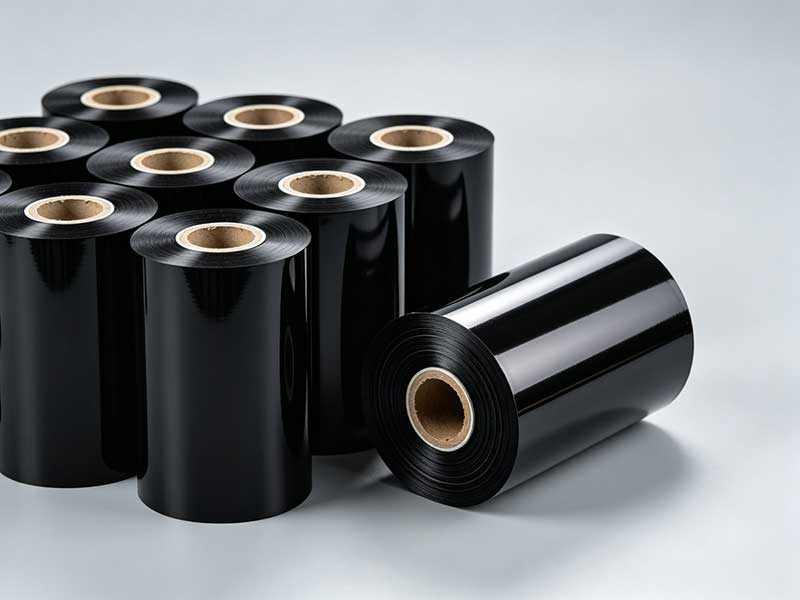
The essence of uneven end faces in ribbon slitting machines is an external manifestation of subtle imbalances between tension, parallelism, correction, and tool condition.
05. October, 2026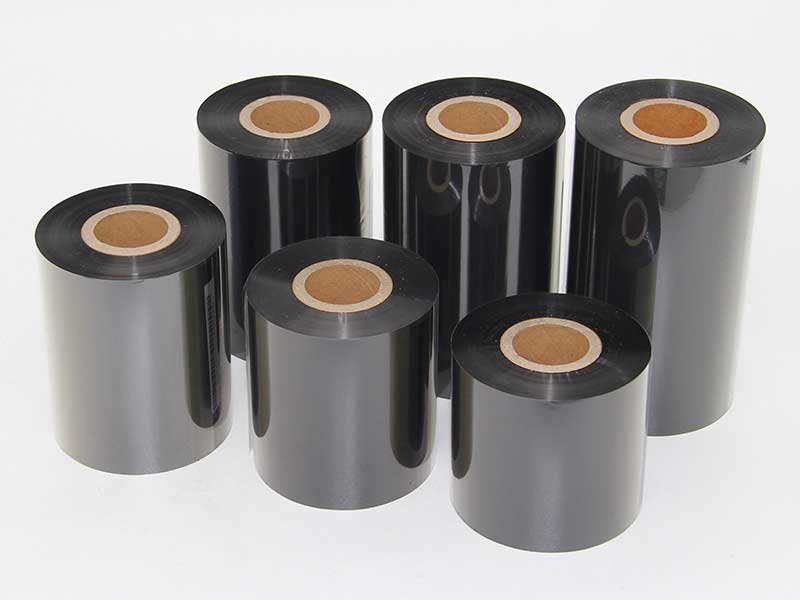
To solve this problem, a systematic inspection is needed from four dimensions: tension control, mechanical precision, auxiliary systems, and operating standards.
05. October, 2026The first watershed in choosing a model isn't speed or brand, but rather — which type of ribbon do you mainly cut?
23. September, 2026When asking suppliers the following seven questions, the quality of the answers is far more valuable than the numbers on the parameter table.
21. September, 2026
This guide explains what buyers need to know about each parameter—not just the numbers, but the practical implications for production quality, material compatibility, and total cost of ownership.
18. September, 2026


 English
 Deutsch
 Français
 Español
 Português
 日本語
日本語 русский
 한국어
한국어 عربي
عربي ภาษาไทย
 Tiếng Việt
 Italiano