
1. Introduction
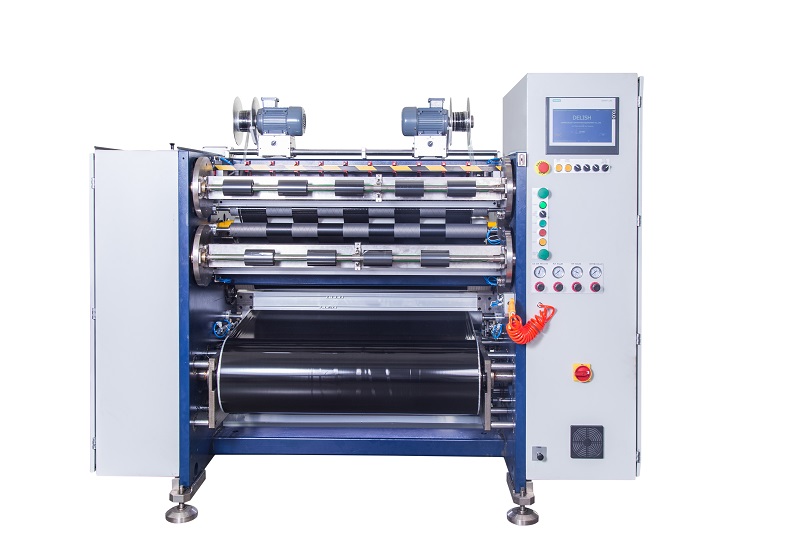
The ribbon slitting machine is a key equipment in the production process of thermal transfer ribbons, and its meter counting accuracy directly affects the length qualification rate of products and the customer's experience. In actual production, due to mechanical wear, tension fluctuations, sensor errors and other factors, the ribbon slitting machine often has the problem of inaccurate meter counting. This article will systematically introduce the common causes of inaccurate meter counting of ribbon slitting machines and the corresponding calibration methods, providing practical reference for equipment maintenance and operators.
2. Analysis of common reasons for inaccurate meter counting
Before calibration, it is necessary to first identify the root cause of the metering error. According to field experience, it can be mainly summarized into the following categories:
1. Mechanical transmission factors
• Pressure Wheel Wear: The surface of the meter meter or pressure wheel is unevenly worn, leading to variations in the actual circumference
• Bearing jamming: The bearing of the meter wheel is poorly lubricated or damaged, resulting in inflexible rotation
• Slippage: The friction between the pressure wheel and the ribbon is insufficient, resulting in relative slippage
• Eccentric rotation: The meter wheel is installed eccentric or the wheel itself is elliptical
2. Electrical and sensor factors
• Insufficient encoder resolution: The selected encoder pulse number does not meet the accuracy requirements
• Signal interference: Encoder signals are subject to electromagnetic interference, resulting in lost or multiple pulses
• Sensor aging: Proximity switches or photoelectric sensors have slower response times
3. Tension and material factors
• Excessive tension fluctuations: The tension of the retraction and unwinding is unstable, leading to changes in the degree of tension of the ribbon
• Uneven ribbon thickness: Fluctuations in the thickness of the substrate or ink layer affect the actual belt length
• Material elasticity differences: Different materials of ribbons have different elastic modulus and different tensile rates
4. Control parameter factors
• Incorrect pulse equivalent setting: The length parameter corresponding to each pulse in the control system is inaccurate
• Insufficient acceleration and deceleration compensation: No effective acceleration and deceleration length compensation is made during the start-stop process
3. Preparation for meter calibration
Before performing the calibration operation, the following preparations should be made:
1. Clean meter wheel and pressure wheel: Remove surface oil, toner and foreign matter
2. Check the mechanical condition: Confirm that the meter wheel rotates flexibly and the bearing has no abnormal noise
3. Calibrate measuring tools: prepare a steel ruler or tape measure that has been metrology verified (accuracy not less than 0.5mm)
4. Select test materials: Use ribbons of the same specifications as normal production
5. Set the Stable Tension: Ensure that the unwinding and rewinding tensions are within the normal operating range
4. Detailed explanation of meter calibration method
Method 1: Static perimeter calibration method
Principle: Directly measure the actual circumference of the meter wheel and correct the pulse equivalent of the control system.
Steps:
1. Make a clear mark on the meter wheel
2. Manually turn the meter meter wheel to turn the marking point to the starting position of contact with the pressure wheel
3. Make ground or rack reference marks at the corresponding position of the wheel flange
4. Rotate the meter wheel exactly 10 times to measure the actual straight-line distance L (unit: mm)
5. Calculate the actual lap circumference: C_actual = L / 10
6. Check the number of pulses per revolution of the encoder P (e.g. 1024 pulses/revolution)
7. Calculate the correct pulse equivalent: K_correct = C_actual/P
8. Modify the pulse equivalent in the system parameters to K_correct
Precautions: The ribbon should be kept tensioned during measurement to avoid errors caused by artificial pulling.
Method 2: Dynamic belt calibration method
Principle: Through the actual length of the belt, the error coefficient of meter counting is inferred.
Steps:
1. Attach a visible mark (such as a white sticker) to the start of the ribbon
2. Fix a precision steel ruler on the machine and align it with the initial position of the mark at zero scale
3. Set the slitting machine to run at normal speed for a theoretical length L_set (e.g. 10 meters)
4. After the device is stopped, read the actual distance the mark has moved relative to the ruler L_actual
5. Calculate the error factor: Error_ratio = L_actual / L_set
6. Multiply the current pulse equivalent by Error_ratio to get the new pulse equivalent
7. Repeat the test 2-3 times to confirm the calibration effect
Improvement scheme: In order to improve the measurement accuracy, the belt distance of 20 meters or 50 meters can be set, and the error coefficient is averaged multiple times.
Method 3: Standard volume comparison method
Principle: Calibration is performed using a standard ribbon of known length.
Steps:
1. Prepare a roll of standard length ribbon (e.g. 100 meters ±0.1%)
2. Install the standard ribbon on the slitting machine unwinding reel
3. Set the meter target value of the slitting machine as the nominal length of the standard roll
4. Stop running the equipment until the meter reaches the set value
5. Check the remaining ribbon and judge the actual belt length
6. Calculate the error scale and adjust the pulse equivalent parameters
Applicable scenarios: high precision requirements, comprehensive calibration before mass production.
Method 4: Encoder signal detection method
Principle: Use an oscilloscope or frequency meter to detect the signal quality of the encoder and troubleshoot electrical faults.
Steps:
1. Disconnect the encoder from the controller and connect it to the oscilloscope
2. Manually and slowly rotate the meter wheel to observe the signal waveforms of phase A and B
3. Check whether the signal amplitude, duty cycle and phase difference are normal
4. Run the device at a constant speed and measure signal frequency stability
5. Check for signal jitter, glitches or missing pulses
6. Replace the encoder or shield the signal line according to the test results
5. Targeted treatment of different error types
| Error performance | Possible causes | Recommended treatment |
| The meter value is large and stable | The pulse equivalent is small | Static perimeter calibration method |
| The meter value is small and stable | The pulse equivalent is large | Static perimeter calibration method |
| Low speed accuracy, high speed bias | Insufficient acceleration and deceleration compensation | Adjust the acceleration and deceleration compensation parameters |
| The number of short meters is accurate, and the number of long meters is biased | Cumulative slippage | Check the pressure of the pressure wheel and clean the wheel surface |
| The error fluctuates randomly | Signal interference or slippage | Encoder signal detection method |
| One-way error (forward and reverse) | Mechanical clearance or eccentricity | Replace meter wheels or bearings |
6. Verification method after calibration
After calibration, validation tests must be performed to ensure that the meter accuracy meets the requirements:
1. Three-point verification method: test at low, medium and high speeds respectively to confirm that the speed has no effect
2. Multi-stage verification method: test the four length sections of 1 meter, 5 meters, 10 meters, and 50 meters, and calculate the error of each section
3. Repeatability Verification: Test the same set length 5 times in a row to evaluate repeatability accuracy
4. Acceptance standard: general ribbon slitting requires a meter measurement error of ≤0.3%, and a ≤ of 0.1% for high-demand products
7. Daily maintenance and preventive measures
In order to avoid the frequent occurrence of inaccurate meter counting, it is recommended to establish a daily maintenance system:
1. Daily inspection: Check the surface cleanliness of the meter wheel before starting the machine to remove foreign objects
2. Weekly maintenance: lubricate the meter wheel bearing, check whether the pressure of the pressure wheel is appropriate
3. Monthly Calibration: A full calibration is performed using the static perimeter method or the standard roll method
4. Quarterly maintenance: disassemble and inspect the meter wheel assembly, measure the wear of the wheel diameter, and replace it in time if the wear exceeds 0.2mm
5. Establish a ledger: record the date, error value, and adjustment parameters of each calibration to form a device history
8. Conclusion
The metering accuracy of ribbon slitting machine is an important indicator of product quality control. By systematically analyzing the source of error, choosing the appropriate calibration method, and adhering to daily maintenance, the problem of inaccurate meter counting can be effectively solved. In practical operation, it is recommended to combine the static perimeter calibration method with the dynamic belt calibration method, which can not only quickly correct the basic parameters, but also verify the accuracy performance under actual working conditions. For application scenarios that require high precision, it can also be considered to upgrade to a closed-loop tension control system with a high-resolution encoder to further improve the stability of meter metering.
Mastering the correct calibration method can not only reduce the loss of scrap products, but also improve the satisfaction of products at the client, which is an important technical means for ribbon manufacturers to reduce costs and increase efficiency.
The essence of uneven end faces in ribbon slitting machines is an external manifestation of subtle imbalances between tension, parallelism, correction, and tool condition.
05. October, 2026To solve this problem, a systematic inspection is needed from four dimensions: tension control, mechanical precision, auxiliary systems, and operating standards.
05. October, 2026The first watershed in choosing a model isn't speed or brand, but rather — which type of ribbon do you mainly cut?
23. September, 2026
When asking suppliers the following seven questions, the quality of the answers is far more valuable than the numbers on the parameter table.
21. September, 2026
This guide explains what buyers need to know about each parameter—not just the numbers, but the practical implications for production quality, material compatibility, and total cost of ownership.
18. September, 2026


 English
 Deutsch
 Français
 Español
 Português
 日本語
日本語 русский
 한국어
한국어 عربي
عربي ภาษาไทย
 Tiếng Việt
 Italiano