
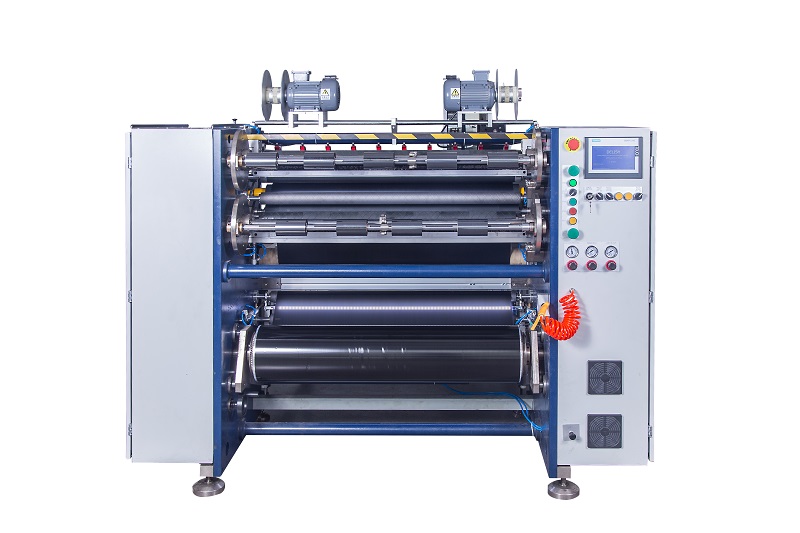
The ribbon slitting machine is an indispensable key equipment in the production process of thermal transfer ribbons, and the service life of its blades directly affects production efficiency and product quality. In actual production, many companies face the problem of rapid blade wear, which not only increases the cost of consumables, but also may lead to problems such as reduced slitting quality and frequent downtime. The following is an analysis of the main reasons for fast blade wear from multiple perspectives.
1. Blade material and quality factors
1. Insufficient blade hardness or improper heat treatment
The hardness and wear resistance of the blade material are the core indicators that determine its service life. If the steel grade selected for the blade is low, or the heat treatment process is not in place, the blade will quickly lose its sharpness under high-speed friction, resulting in coiled edges or chipping.
2. Backward coating technology
Quality blades often feature wear-resistant coatings such as TiN (titanium nitride), TiCN (titanium carbonitride), or DLC (diamond-like). Blades with poor coating quality or uncoated coating have a large surface friction coefficient and are more likely to be worn by the coating material on the back of the ribbon.
2. Ribbon substrate and coating characteristics
1. Abrasiveness of ribbon back coating
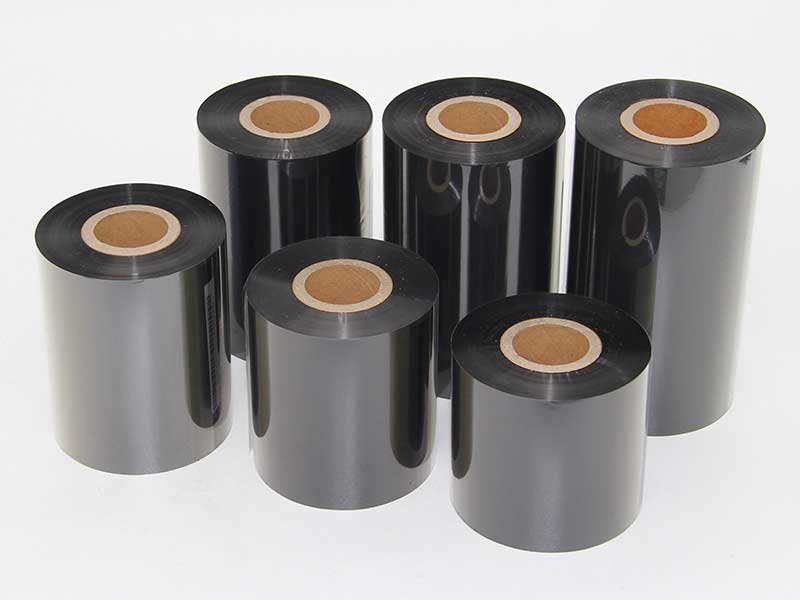
Some ribbons, especially those with high heat resistance and durability, have hard particles in the back coating, such as silicon-based materials or ceramic components. These particles grind the edge of the blade like sandpaper when they come into contact with the blade, accelerating wear.
2. Ribbon substrate thickness and material
Thicker ribbon substrates (such as PET film over 5 μm) or ribbons with glass fiber reinforcement have greater cutting resistance to the blade. Long-term cutting of such materials can lead to fatigue failure at the blade edge due to repeated stress.
3. The influence of additives and fillers
Some specialty ribbons are added with wear-resistant or anti-static fillers that can be close to or even exceed the hardness of the blade material, causing the blade to be "reverse-cut" worn.
3. Equipment operating parameters and mechanical status
1. The slitting speed is too high
If the slitting speed is set too high (such as more than 300m/min) in order to pursue output, the instantaneous friction heat between the blade and the ribbon increases sharply, which can easily cause the blade to anneal and soften locally, and the wear will be aggravated.
2. Improper blade pressure setting
The contact pressure between the blade and the bottom roller is too large, which will cause the blade to withstand radial force beyond the design range and accelerate the passivation of the cutting edge. Too little pressure can lead to incomplete shearing and repeated cutting, which in turn increases the number of wear.
3. Concentricity deviation of the tool shaft
Poor concentricity of the cutter shaft or bottom roller (runout more than 0.02mm) will cause the blade to be subjected to uneven impact load at each rotation, which can easily cause local chipping or partial grinding of the blade.
4. Aging or surface damage to the bottom roller
The appearance of pits, scratches or uneven rubber hardness on the surface of the bottom roller will cause the blade to be subjected to uneven force during cutting, producing small vibrations and impacts, and accelerating the fatigue failure of the blade.

4. Operation and maintenance issues
1. Improper blade installation
The blade is not installed according to the angle and direction required by the equipment, resulting in the actual cutting angle of the cutting edge deviating from the design value, causing the side of the blade to withstand unnecessary friction and causing abnormal wear.
2. Lack of regular inspections and replacements
Some operators wait until the ribbon has burrs, powder drops, or cuts continuously, and the blades are often severely worn, and continued use may even damage the bottom roller or tool holder.
3. Lubrication and cleaning are not in place
Lack of proper lubrication between the blade and the cutting table, or the accumulation of ribbon dust and adhesive residue at the cutting edge, forms "three-body wear" (i.e., hard particles roll and scratch between the blade and ribbon), which significantly accelerates the wear rate.
5. Environmental factors
1. Improper control of temperature and humidity
Excessive workshop temperature will cause the blade to dissipate heat poorly during continuous operation; Too low humidity can easily generate static electricity, which adsorbs dust to form an abrasive paste on the blade. Both can accelerate wear and tear.
2. Dust pollution
If the tiny dust generated during ribbon slitting is not discharged in time, it will accumulate near the edge of the blade, forming an abrasive-like mixture that aggravates wear.
Epilogue
The rapid wear of ribbon slitting machine blades is often the result of a combination of factors, not a single cause. To effectively extend the life of the blade, it is recommended to start from the following aspects: choose high-quality blades with wear-resistant coatings; Reasonably set the slitting speed and pressure according to the characteristics of the ribbon; regularly check and maintain the accuracy of the cutter shaft and bottom roller; Standardize the operation process and establish a regular blade replacement plan; At the same time, keep the production environment clean and the temperature and humidity are suitable. Only systematic investigation and optimization can truly solve the problem of fast blade wear and achieve cost reduction and efficiency increase.
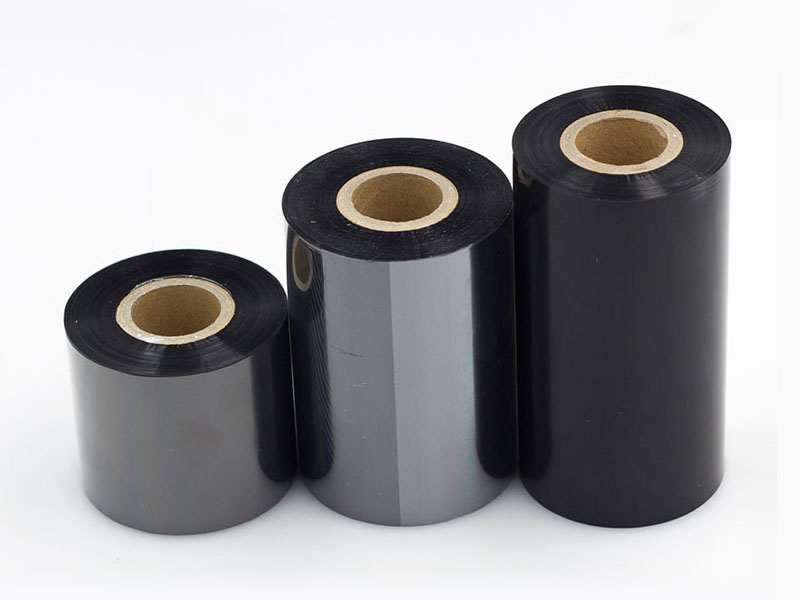
The coating formula, base film characteristics, and physical specifications of the ribbon directly affect the suitability and yield of the slitting machine.
09. October, 2026
The core function of a ribbon slitting machine revolves around three dimensions: "precise cutting, stable rolling, and fast running."
09. October, 2026This article starts from actual usage scenarios to outline a clear selection approach.
09. October, 2026The essence of uneven end faces in ribbon slitting machines is an external manifestation of subtle imbalances between tension, parallelism, correction, and tool condition.
05. October, 2026To solve this problem, a systematic inspection is needed from four dimensions: tension control, mechanical precision, auxiliary systems, and operating standards.
05. October, 2026


 English
 Deutsch
 Français
 Español
 Português
 日本語
日本語 русский
 한국어
한국어 عربي
عربي ภาษาไทย
 Tiếng Việt
 Italiano