
In PET film slitting production, the order change link is often a key bottleneck affecting the overall efficiency. Many operators have a headache when they mention "order change" - long downtime, repeated cutter adjustment, and serious material waste...... If you feel the same way, the following practical tips are worth reading carefully.
1. Why is your order change slower than others?
Let's check the self-check first, the performance of common inefficient order changes:
• After the shutdown, we will start to find the process parameters of the next order, and all the staff are waiting for you to flip through the records
• Each knife adjustment must be tried 3-4 times to achieve the width qualification
• Discharging, feeding, cleaning, and adjusting tools are all serial operations, and one person can only move after doing the next one
• After changing the order, it is found that the specifications are wrong, and the rework is redone
If these problems are not solved, it will take 30-40 minutes or even longer to change an order, and 4-5 orders a day will be gone in half a day.
2. Prepare in advance: 15 minutes before changing orders can save 30 minutes
The core of efficient order exchange is to "do everything you can before downtime".
1. Process parameters are in place in advance
With the last 20-30 minutes left on the previous order, the operator should:
• Get the width, thickness, winding length, and tension requirements of the next order
• Input parameters into the slitting machine control system in advance (most devices support pre-stored process numbers)
• Prepare the corresponding blades, spacer rings, paper cores, and tape
2. Pre-placement of materials
The master roll to be used for the next order is lifted to the slitting area next to the slitting machine in advance, and the paper core is classified according to specifications and placed next to the loading rack. Don't underestimate this step - many people spend 5-10 minutes "looking for something" during the order change.
3. Fixed-point management of tools
Place in a fixed position next to the slitting machine table:
• Specialized wrenches (one set for each machine)
• Spare blade and spacer ring organizer
• Tape measure, caliper, flashlight
• Air guns and rags for cleaning
Key principle: You must have access to any common tool within 30 seconds.
3. Change order operation: change serial to parallel
The biggest difference between the excellent team and the ordinary team is the task decomposition.
Take a three-person group as an example:
| Time node | Operator A | Operator B | Operator C |
| 0-1 minute | Shutdown and cut off the film | Record the number of meters in the last single tail | Prepare new paper cores and tapes |
| 1-4 minutes | Remove the finished product roll, weigh and label | Loosen the old shaft and dismantle the knife | Clean the roller surface and check the pressure roller |
| 4-7 minutes | The new master coil is hoisted on the loading arm | Install knives and adjust the spacing according to the new specifications | Film penetration and bonding film tape |
| 7-9 minutes | Review the knife distance and confirm the first inspection | Equipment reset, parameter confirmation | Clean up waste edges and recycled materials |
| 9-12 minutes | Start running at low speed | Observe the quality of the winding end | Cutting and splicing film, normal speed-up |
Parallel operations can reduce the order change time from 30 minutes to less than 12 minutes.
4. Quick knife adjustment: Say goodbye to repeated trial cuts
Adjusting knives accounts for more than 40% of the order change time. Here are a few hard-core tips:
1. Tool holder positioning method
Pre-engrave the commonly used width scale line (such as 500mm, 800mm, 1000mm) on the tool shaft, and directly use the tool holder to align the scale line when changing orders, and the accuracy of the first tool can be controlled within ±1mm, and it will pass after a trial cut.
2. Standard set of spacer rings
According to the common specifications of the factory, 3-5 sets of standard spacer ring combinations (with different colors to mark the width) are equipped in advance, and the whole is directly replaced when changing orders, without calculating the thickness one by one. For example:
• Blue set = 800mm
• Red set = 1000mm
• Yellow set = 1200mm
3. The first inspection of the "three-knife method"
You don't have to cut a whole roll when trying to cut:
• First knife: cut 100 meters, check the left and right widths
• Second knife: cut 200 meters and check the neatness of the end face
• The third knife: cut 500 meters, and continue to produce after confirming that there is no abnormality
Save at least 5-8 minutes than cutting a whole roll and then finding the problem.
5. Reducing the frequency of order change itself is also efficiency
If the frequent change of orders is due to the large number of orders, you can consider:
• Combined production of orders of the same width: Arrange orders of the same width within a week and adjust the knife to the end
• Reserved inventory strategy: Commonly used specifications reserve a small amount of inventory, and concentrate emergency bulk orders on a fixed order replacement period
• Order change record table: Record the start and end time, reason, and abnormality of the order change every day, and analyze it once a week to find out duplicate problems
Many factories have done statistics: the efficiency of order change increases by 50%, not by faster actions, but by less ineffective movement and waiting.
6. Safety is always the premise of efficiency
Finally, a reminder: If you are in a hurry, the following actions cannot be saved:
• After the shutdown, the emergency stop switch must be pressed and the maintenance sign must be hung
• Cut-resistant gloves must be worn when changing knives
• Fingers are kept away from the knife edge and the press roller pinch point when threading the film
• Confirm that the spreader is locked when lifting the master coil
The downtime loss caused by a work-related accident is enough to save you a year of order replacement.
Written at the end
The order change efficiency of PET film slitting machine is essentially a comprehensive embodiment of preparation ability, team division of labor, and tool management. The above tips do not require additional investment in equipment, as long as the operator and team persist in implementation, changes can be seen within a week.
How long does it take for your factory to change an order now? Welcome to leave a message in the comment area. If you find it useful, transfer it to your partner to watch together - one person is not fast, and the whole class is really efficient.
This article reviews the core considerations in selection from dimensions such as accuracy, speed, hardware configuration, flexible production adaptation, and manufacturer evaluation.
01. September, 2026This article systematically reviews the key points for selecting a PET film slitting machine, covering core parameters, common misconceptions, and practical validation.
20. August, 2026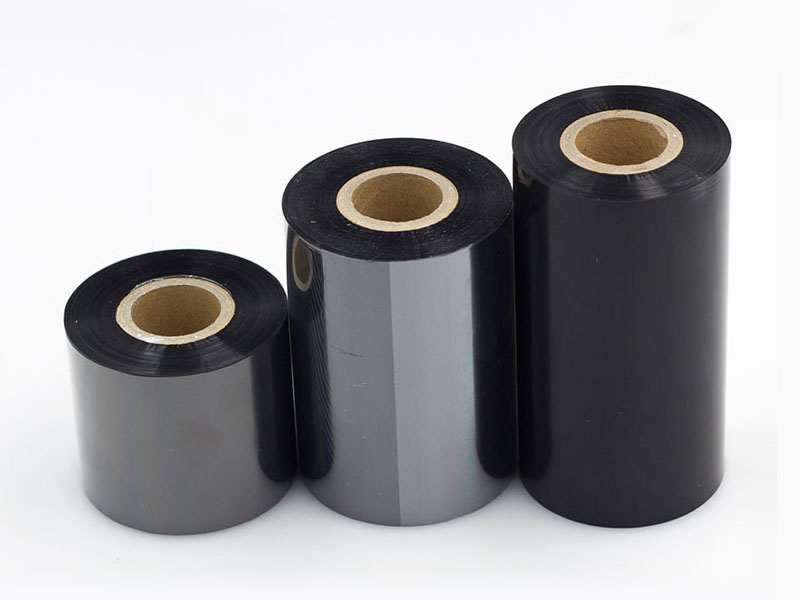
Its cut quality directly determines whether the barcode is clear, whether the print head is damaged, and whether the logistics label can flow smoothly.
19. August, 2026Faced with the dazzling array of models on the market, how can you clear away the spec fog and make wise decisions?
31. July, 2026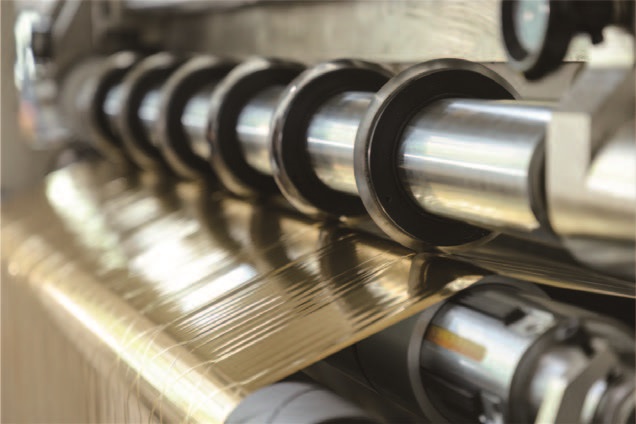
One wrong step and losing not just a roll of materials, but the quality of an entire batch of high value-added products.
23. July, 2026


 English
 Deutsch
 Français
 Español
 Português
 日本語
日本語 русский
 한국어
한국어 عربي
عربي ภาษาไทย
 Tiếng Việt
 Italiano