
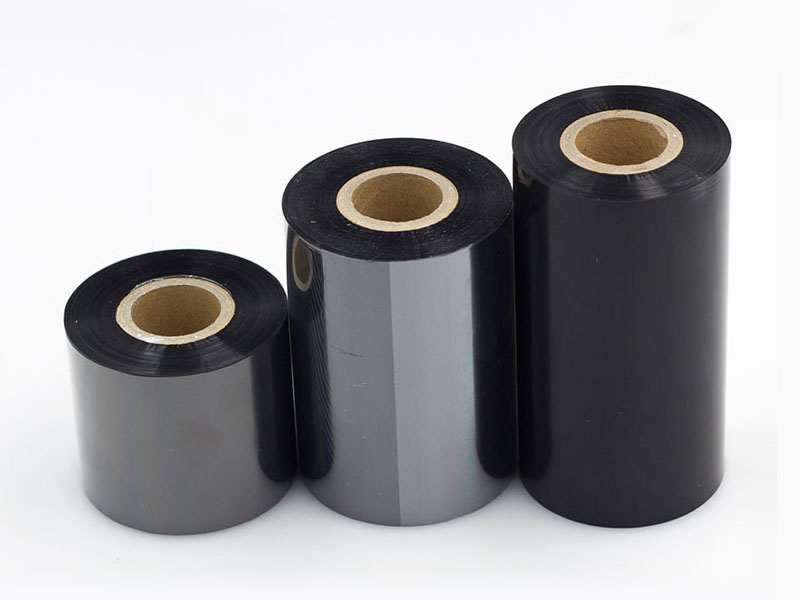
The carbon ribbon, a composite of PET film and coating only a few microns thick, is the "ink" used in heat transfer printing. Its cut quality directly determines whether the barcode is clear, whether the print head is damaged, and whether the logistics label can flow smoothly. When wide-format master rolls are precisely divided into narrow-format products adapted for different printers, any slight deviation can trigger chain problems downstream. The factors affecting ribbon slitting quality are multidimensional: tension control is the soul, the cutting system is the framework, and environmental and management are indispensable guarantees.
1. Tension Control: The "Soul of Stability" That Determines Quality
Among all influencing factors, tension control is recognized as the most core variable. The PET substrate thickness of ribbons is usually between 4-20μm and is extremely sensitive to stretching. Improper tension control leads to immediate consequences:
• Excessive tension: the base film is stretched, causing the width to shrink and dimensions to be inaccurate after slitting; In severe cases, the ink layer may develop microcracks, causing ribbon powder shedding, contaminating products, or damaging print heads.
• Too low tension: the material is loose and wrinkled, unevenly rolled, and the edges appear "snake-shaped"; Finished ribbons are prone to core misalignment and sideslip during transportation.
• Tension fluctuations: Uneven internal tightness during winding forms a "daisy core" winding, greatly increasing the risk of print misalignment and broken tape during downstream use.
Modern high-precision slitting has abandoned single tension force control and generally adopts segmented closed-loop control strategies:
1. Unwinding Zone: Tension should decrease as the coil diameter decreases to prevent excessive stretching of the inner layer.
2. Slitting zone: Requires constant tension to provide a stable cutting state for the tool.
3. Winding Zone: Uses taper tension control, with linear decreasing tension as the diameter increases, preventing the outer layer from being overly tight and crushing the inner layer.
In addition, differences in ribbon materials also require "tailor-made" tension: wax-based ribbons are softer in texture and suitable for low tension (3-5N); The mixed base requires medium tension (5-8N); Resin-based ribbons require higher tension (8-12N) to ensure uniform cuts. The closed-loop servo system uses real-time feedback from tension sensors and dynamic adjustment by PID algorithms, suppressing tension fluctuations to within ±1%, which is a key technology for improving yield rates above 99%.
2. Tool System: The "Fine Craftsmanship" That Determines Edge Quality
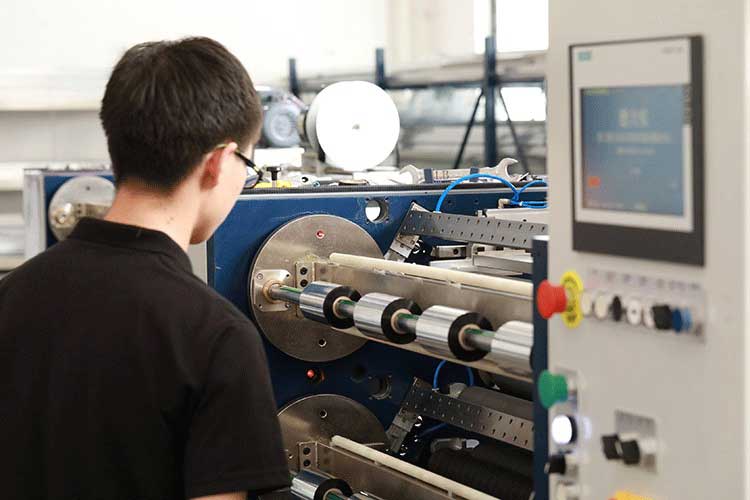
If tension is "internal skill," then the cutting system is "external skill." Slitting is not simply about "cutting," but about pursuing cutting results—clean and crisp, without burrs or flaring. Burrs not only affect appearance but can also scratch expensive print heads during printing.
Key parameters affecting trimming quality include:
• Tool material and angle: For ribbons containing resin-based or high-hardness pigments, choose carbide or diamond-coated inserts and keep the cutting edge sharp (cutting edge radius ≤5μm). The rake angle of the insert is generally set at 15°-20° to reduce cutting resistance.
• Overlap and clearance: The overlap between the upper and lower blades must be accurate to 0.01-0.03mm, with lateral clearance controlled at 0.005-0.02mm. Through microscopic calibration, it is confirmed that the blade is cutting rather than tearing.
• Cutting line speed: varies depending on the material. Resin-based ribbons can have slightly faster wire speeds (1.5-2.5m/s), while wax-based ribbons require lower speeds (0.8-1.2m/s) to prevent hot-melt wire drawing.
Auxiliary technologies such as ultrasonic vibrating blades and cold air jet systems can effectively reduce the cutting resistance and thermal effects of high-viscosity carbon ribbons.

3. Equipment Rigidity, Correction, and Environment: Systematic Support That Cannot Be Overlooked
Precision control systems require stable mechanical platforms.
• Equipment rigidity: A high-rigidity frame and high-precision guide rollers are fundamental, ensuring no harmful vibration during high-speed operation, with blade shaft runout strictly limited to the micron level.
• Correction system: The accuracy of EPC (Edge Position Control) is critical. If the correction response is delayed, the slitted strip will appear "serpentine" and deviate. Modern equipment uses CCD visual inspection, with correction accuracy controlled within ±0.2mm.
• Dust-free environment: Ribbon easily absorbs dust, and contaminated ribbons may develop white spots during printing. A cleanroom and a constant temperature and humidity (23±2°C, RH50±5%) environment are essential requirements for producing high-quality ribbons.
Conclusion
The core factors affecting the quality of carbon ribbon slitting are not isolated factors. Tension control provides stable material conditions, the tool system performs precise physical separation, and equipment rigidity and environmental protection support the first two. Only by working together can the quality goals of "smooth edges without burrs, precise width tolerances, and flat winding end faces" be achieved. For manufacturing enterprises, understanding the physical nature and control logic of these elements, and establishing a process database based on data feedback, is a key step toward high-end manufacturing.
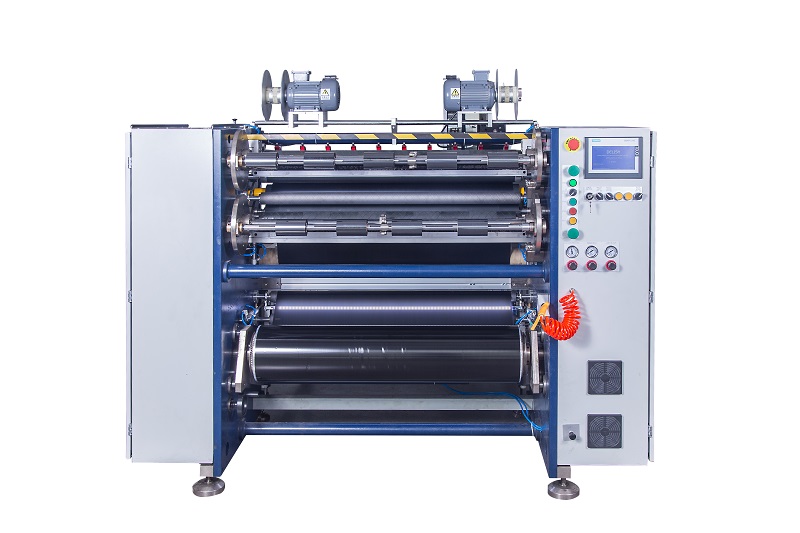
Choosing a slitting machine essentially means finding the most suitable balance between precision, efficiency, stability, and cost.
04. August, 2026
Based on current trends in green manufacturing technology, here are four practical energy-saving retrofit solutions proven in practice.
28. July, 2026
This article starts from three core dimensions: speed, accuracy, and cost, helping you clarify your choice logic.
11. July, 2026
Tension is properly controlled, resulting in a flat and smooth product; When tension is out of control, burrs, broken bands, and layering follow one after another.
11. July, 2026Usually, without replacing the main unit, improving overall efficiency by 20%-40% through the above 2-3 improvements is entirely achievable.
11. July, 2026


 English
 Deutsch
 Français
 Español
 Português
 日本語
日本語 русский
 한국어
한국어 عربي
عربي ภาษาไทย
 Tiếng Việt
 Italiano