
During ribbon production, the flatness of the slitting machine's winding end face directly affects the quality of the finished product and the subsequent user experience. Many operators have encountered issues with uneven, serrated, or trumpet-shaped winding end faces. If you encounter this situation, don't rush to adjust all parameters. Please check the following five key points one by one.
1. Check whether the winding tension settings are reasonable
Tension is the primary factor affecting the flatness of the winding end face.
• Excessive tension: This can cause the ribbon to be pulled too tight, increasing interlayer pressure, causing the material to slide laterally after winding, resulting in a "provoked" shape on the end face
• Too low tension: the core is loose, the winding is loose, and the end face is prone to "sagging edges" or "bell edges"
Recommendation: Check the settings of the tension control system (magnetic powder clutch, servo motor, etc.), refer to the recommended tension range provided by the material manufacturer, and use a taper tension control mode, meaning gradually reduce the tension as the coil diameter increases.
2. Check whether the correction device is working properly
The automatic centering system is the core guarantee for maintaining end-face neatness.
• Check whether the correction sensor is aligned with the edge of the material and whether there is dust obstruction
• Test whether the correction actuator (electric push rod or hydraulic system) operates sensitively and without sticking
• Confirm whether the correction response speed matches the winding line speed—too slow will cause edge fluctuations, too fast will cause oscillation
Recommendation: Regularly clean the sensor lens and observe whether the correction action smoothly follows the material's edge changes during operation.
3. Check the condition of the slitting tool
Tool condition directly affects the stress distribution at the edge of the material after slitting.
• Blade wear: Causes burrs or tiny tears, which accumulate during winding, resulting in uneven end faces
• Improper meshing gaps between the upper and lower blades (or round and bottom blades) can cause wavy stress on the cut edges
Recommendation: Check whether the blade edge is sharp, and confirm that the overlap and lateral clearance meet process requirements. When cutting carbon ribbons, the overlap between the upper and lower blades is generally recommended to be 0.5-1.0mm.
4. Check the condition of the winding reel and pressure roller
The precision of mechanical components is equally important.
• Check if the winding shaft is bent or eccentric—check with a dial gauge, and keep radial runout within 0.05mm
• Check whether the pressure roller (contact roller) is unevenly worn, or the pressure at both ends is inconsistent
• Check whether the surface of the winding roll is smooth, and whether there is glue residue or scratches causing uneven local stress on the material
Recommendation: The winding shaft should be regularly calibrated for dynamic balance, cylinder pressure at both ends of the roller should be adjusted to be consistent, and a level should be used to calibrate the parallelism between the roller and the winding shaft.

5. Check the material itself and its flattening condition
Sometimes the root of the problem lies in incoming materials or operational details.
• Check whether the incoming ribbon itself has defects such as uneven thickness, leaf edges, or looseness in the middle
• Check whether the material is fully flattened before slitting—check whether all guide and stretching rollers rotate smoothly
• Excessive static electricity can also cause poor interlayer adsorption and interlayer misalignment during winding
Recommendation: Measure the uniformity of incoming material thickness, confirm that all roller surfaces are free of adhering foreign matter, and install static eliminators if necessary.
Summary
Uneven end faces when winding ribbon slitting machines are mostly not caused by a single fault, but by a combination of multiple factors. The recommended inspection order is:
1. Soft first, then hard: first check process parameters such as tension and correction
2. Next, look at the machinery: confirm the accuracy of the tools, winding reels, and rollers
3. Finally, look at the materials: Evaluate the quality of incoming materials
Each adjustment changes only one variable, observing the effect before proceeding to the next step, so you can quickly and accurately identify the root cause. I hope these five points can help you effectively solve the problem of uneven ends on the end.
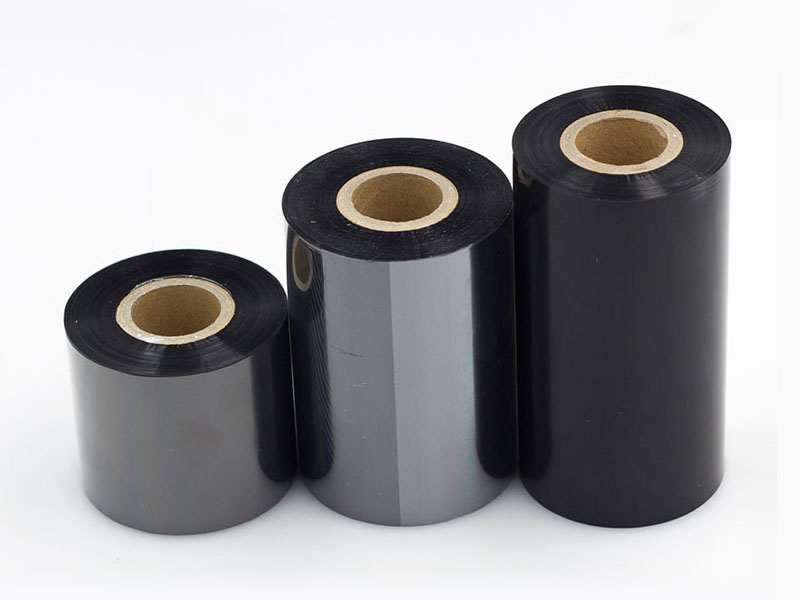
The value of the fully automatic ribbon slitting machine lies precisely in these two most basic criteria: precise cutting, minimal waste.
27. October, 2026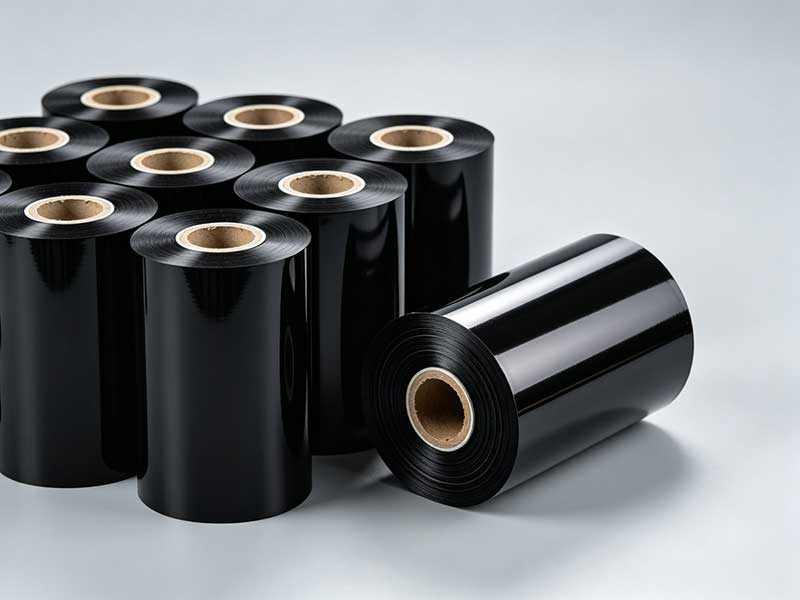
The widespread adoption of fully automatic ribbon slitting machines is changing this situation. Its core value can be summed up in six words: efficient, stable, and labor-saving.
22. October, 2026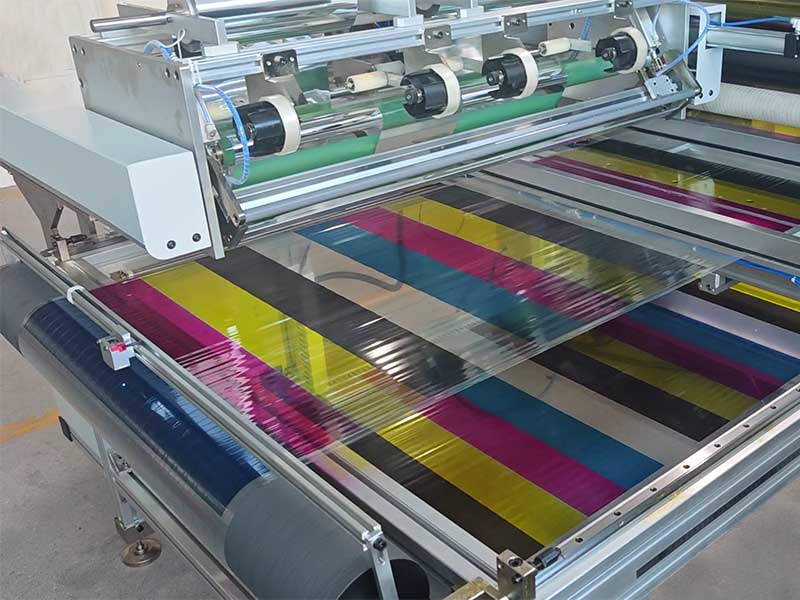
The color ribbon slitting machine is mainly used for wide roll slitting and rewinding of materials such as card printer color ribbons and thermal transfer ribbons.
21. October, 2026This article will break down the technical core of this function from four dimensions: signal detection, control logic, shutdown strategy, and precision calibration.
19. October, 2026The value of the automatic correction function lies in incorporating this runaway variable into a precise closed loop, shifting slitting operations from "post-event selection" to "real-time self-heali
19. October, 2026


 English
 Deutsch
 Français
 Español
 Português
 日本語
日本語 русский
 한국어
한국어 عربي
عربي ภาษาไทย
 Tiếng Việt
 Italiano