
Ribbon slitting machines play a key role in the production of heat transfer consumables, while tension control is the core factor determining slitting quality. Unstable tension can cause ribbons to wrinkle, misalign, uneven winding, or even break ribbons, directly affecting yield and production efficiency. This article will systematically review the common causes of tension instability and corresponding adjustment techniques based on actual production experience.
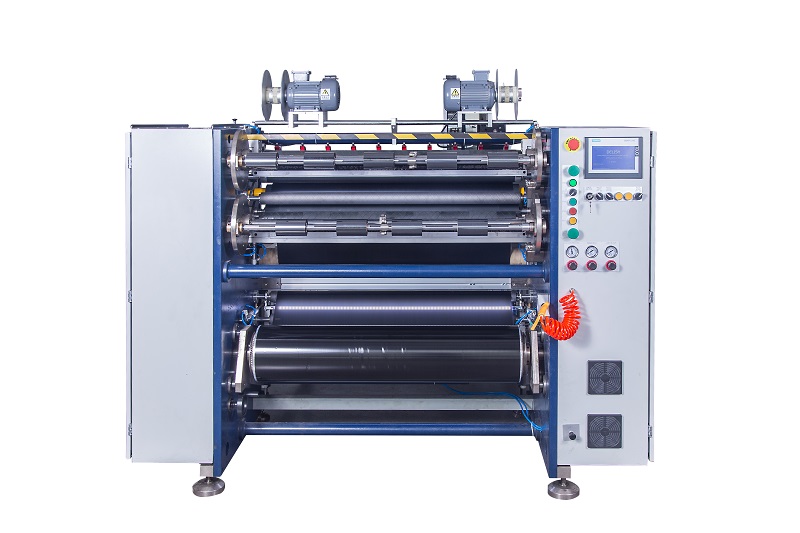
1. First assess the symptoms, then pinpoint the cause
Different manifestations correspond to different fault points. Observe before taking action to avoid detours:
| Symptoms | Possible reasons |
| Uneven tightness and uneven edges during rolling | Fluctuations in winding tension and uneven pressure on the rollers |
| Periodic jitter during operation | Eccentricity of mechanical components, bearing wear |
| Large fluctuations occur at the moment of start or stop | Improper acceleration/deceleration settings, delayed brake response |
| The tension on one side is noticeably higher or too low | The guide roller is not level, and the pressure on the expansion shaft is uneven |
| Full-width random fluctuations | Performance degradation of magnetic particle clutch/brake systems, and mismatch of controller parameters |
2. Mechanical Adjustment (Most Easily Overlooked)
1. Check the parallelism and flexibility of the guide rollers
If the guide rollers are not parallel, the ribbon will generate lateral force on the roller surface, causing uneven tension on both sides. Use a spirit level or feeler gauge to check the parallelism between guide rollers, with errors controlled within 0.05mm/m. At the same time, manually rotate each guide roller to ensure the bearings rotate smoothly and without abnormal noises.
2. Pressure uniformity adjustment of the pressure roller
Slitting machines usually have multiple pressure rollers (such as laminating pressure rollers and rewinding pressure rollers). If the cylinder or spring pressure on both sides is uneven, it will directly cause uneven tension. Use a pressure gauge to measure the pressure on both sides one by one, and adjust the pressure regulator valve to ensure consistent readings on both sides. For older spring structures, check whether the springs are fatigued or deformed.
3. Pressure stability of the gas expansion shaft
If the winding and unwinding reels use a gas expansion shaft, pressure fluctuations can cause the core to slip or seize. It is recommended to install a pressure stabilizing valve in the gas circuit and set the air storage tank pressure at a position 0.1-0.2MPa above the working pressure to ensure stable gas supply.
4. Concentricity and fastening of transmission components
Check whether the connection between the magnetic powder clutch/brake and the shaft is concentric; eccentricity can cause periodic torque fluctuations. At the same time, confirm that the fastening screws on the coupling, synchronous pulley, and other components are not loose.
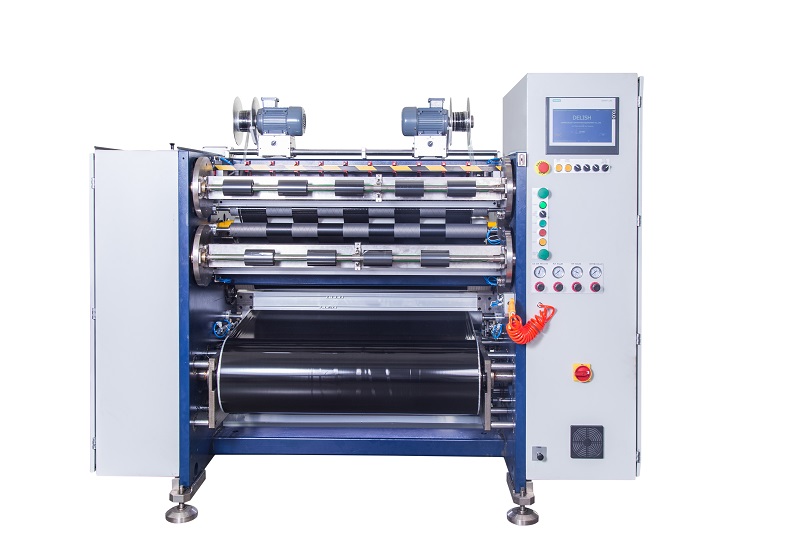
3. Optimization of electrical and control parameters
1. Aging compensation for magnetic powder clutches/brakes
The magnetic powder clutch is the core actuator for tension control. After more than a year of use, the magnetic powder will settle or clump, leading to poor linearity. Recommendations:
• Perform regular "magnetic particle activation": Without penetrating the membrane, let the equipment run at low idle speed, supplying the magnetic powder clutch with about 50% rated current for 10-15 minutes
• If activation is ineffective, use a DC resistance meter to measure the coil resistance and check for magnetic powder leakage
• Replace magnetic powder or the entire clutch set during severe aging
2. PID parameter tuning (for closed-loop tension control systems)
Many mid-to-high-end slitting machines are equipped with tension sensors and PID controllers. If tension fluctuations are periodic and amplitude gradually decays, it is usually due to excessive gain; If the response is slow and fluctuations are slow, the integration time is relatively long.
Recommended debugging steps:
• First, set a smaller proportion (P=10-20%), and set integrals and differentials to 0
• Gradually increase P until a small amplitude of the oscillation appears, then lower it to the critical value where the oscillation disappears
• Add integration time I, starting from 5 seconds and adjusting downward until static errors are eliminated but no overshoot
• Differential D is generally used to suppress fast disturbances and can be set to 1/8~1/4 of the I value
3. Matching acceleration and deceleration slope times
Sudden increase in tension at startup or sudden relaxation at stopping is often due to acceleration and deceleration times not matching the response speed of the tension controller. It is recommended to set acceleration time to 3-5 seconds and deceleration time to 4-6 seconds, with fine-tuning based on the device's inertia.
4. Check whether the tension setting is within a reasonable range
Check whether the current process tension requirements exceed the effective adjustment range of the equipment. For example, when the magnetic powder clutch outputs below 10% or above 90%, linearity is poor; try to set the operating point between 20% and 80%. If the process tension requirement is too low, mechanical damping (such as slightly increasing friction plate pressure) can be appropriately increased to improve control stability.
4. Operational and process considerations
1. Whether the membrane penetration path meets the design requirements
Re-check the film penetration path of the ribbon in standby mode to ensure that the wrap angle of each contact roller meets design requirements. An incorrect film penetration method can cause the actual tension to be magnified or reduced, and operators are most likely to make such mistakes after changing specifications.
2. Coiling roundness and dimensions
Using deformed paper tubes or plastic cores can cause periodic runout during winding, which in turn interferes with the tension of the winding. Before getting on the vehicle, use a caliper to check whether the inner and outer diameters of the roll core are uniform; any severely deformed parts must be scrapped.
3. Differentiated tension settings for different substrates
The tensile modulus of PET, wax-based, mixed-based, and resin-based ribbons differs; the recommended initial reference values are:
• PET film base: 8-12N/m
• Wax-based ribbon: 5-8N/m
• Blended/resin-based: 10-15N/m
The above values vary depending on equipment brand and width, and are for on-site cutting reference.

5. Quick Inspection Process (On-site Practical Version)
When tension instability occurs, it is recommended to check in the following order and avoid immediately adjusting parameters:
1. Idle test: Do not pass through the film, let the retractor reel run idle, and observe whether the tension feedback is stable→ If fluctuations persist, focus on inspecting the sensor and magnetic particle components
2. Low-speed film penetration test: Run at 5-10m/min, observe the tension curve→ and eliminate dynamic issues at high speeds
3. One-side Troubleshooting: Sequentially isolate unwinding or rewinding control to determine whether the source of fluctuation comes from the unwinding or rewinding side
4. Replacement Testing: Swap suspected problematic magnetic powder clutches with normal spare parts to quickly locate hardware faults
5. Data Recording: After each adjustment, record tension values, parameters, and effects, creating maintenance records for the machine
6. Preventive maintenance recommendations
Rather than waiting for problems to be repaired, it's better to establish a regular maintenance mechanism:
• Monthly: Clean the surface of the guide roller, check bearing clearance, and measure the resistance of the magnetic powder clutch coil
• Quarterly: Recalibrate the zero point of the tension sensor and check the gas-expanding shaft sealing ring
• Every six months: replace the magnetic powder in the clutch (depending on usage time) and calibrate all guide roller parallelism
• Before each batch starts: quickly pull and check for abnormal damping in the ribbon's passage path
Unstable tension is rarely caused by a single cause; it is often the result of mechanical wear, electrical aging, and process settings combined. By patiently following the steps above to troubleshoot one by one, most issues can be located and resolved within 2 hours. If all conventional methods fail, the final step is to contact the original manufacturer—but before that, I hope this article has helped you save you this after-sales cost.
The tips in this article apply to common medium- and low-speed ribbon slitting machines (50-300m/min). For high-speed slitting lines (>400m/min), additional consideration of airflow disturbance and dynamic compensation algorithms is required. It is recommended to refer to the original equipment manual.
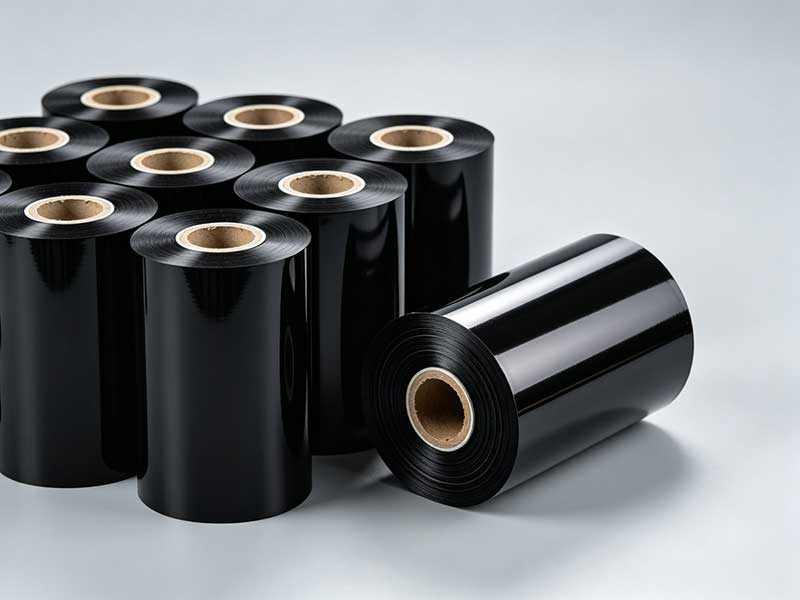
The widespread adoption of fully automatic ribbon slitting machines is changing this situation. Its core value can be summed up in six words: efficient, stable, and labor-saving.
22. October, 2026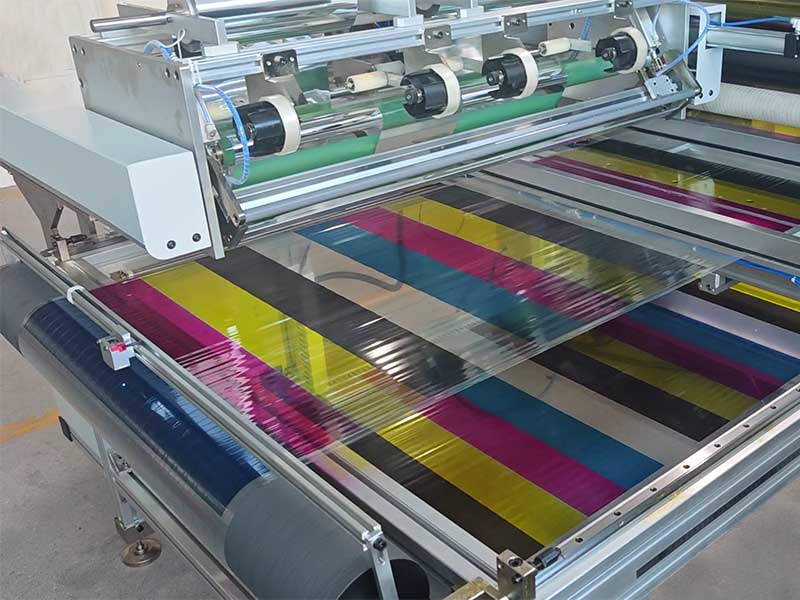
The color ribbon slitting machine is mainly used for wide roll slitting and rewinding of materials such as card printer color ribbons and thermal transfer ribbons.
21. October, 2026
This article will break down the technical core of this function from four dimensions: signal detection, control logic, shutdown strategy, and precision calibration.
19. October, 2026
The value of the automatic correction function lies in incorporating this runaway variable into a precise closed loop, shifting slitting operations from "post-event selection" to "real-time self-heali
19. October, 2026This paper proposes a practical efficiency improvement plan from three dimensions: downtime management, switching optimization, and tension upgrade.
19. October, 2026


 English
 Deutsch
 Français
 Español
 Português
 日本語
日本語 русский
 한국어
한국어 عربي
عربي ภาษาไทย
 Tiếng Việt
 Italiano