
Efficiency improvement does not rely solely on motor speed, but is a systematic engineering project involving equipment, materials, and processes. The following analysis covers three aspects: equipment hardware, material characteristics, and process parameters, hoping to provide you with a useful reference.
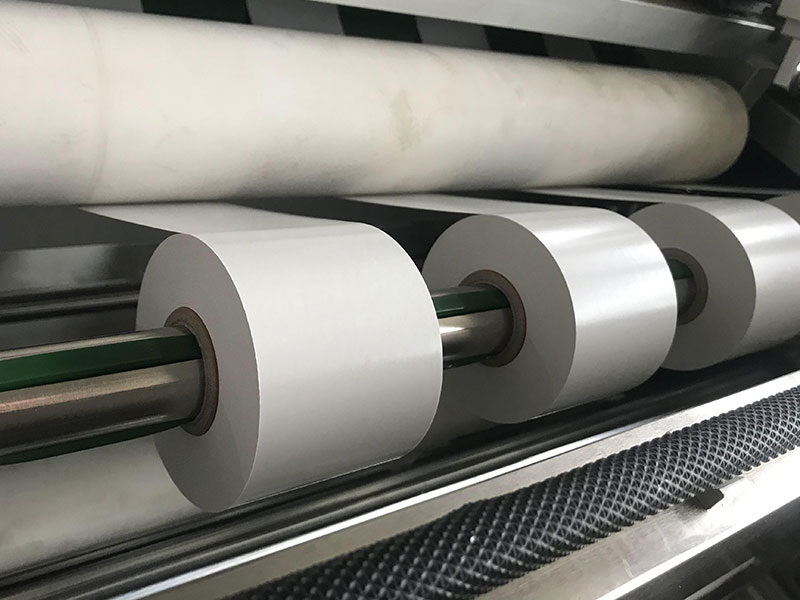
1. Equipment Hardware: The Game Between Mechanical Rigidity and Tension Control
The physical upper limit of slitting efficiency is first determined by the equipment itself. For single-sided adhesive (usually with a thinner substrate and sensitive coating layer), the overall rigidity of the machine is crucial. During high-speed operation, even slight vibrations between the spindle and blade shaft can directly cause edge waves or deviation, forcing slow operation.
• Rewinding reel and roller structure: In single-sided rubber slitting, the most efficient component is often the "winding end." It adopts a dual drive structure of central coiling + surface pressure rollers, effectively preventing the phenomenon of "loose inside, tight outside" or "bottom wrinkle" caused by insufficient tension during winding. The pressure of the compression roller must automatically decrease as the coil diameter increases, which directly determines whether the winding speed can remain stable at the set peak.
• Durability of the tool group system: Whether it's a round or flat blade, the wear resistance of the blade is essential for continuous high-speed operation. It is recommended to shorten tool change cycles and select tools with higher grinding precision to avoid dullness causing whitening on the cutting surface or the formation of "tail filaments," which could lead to machine downtime.
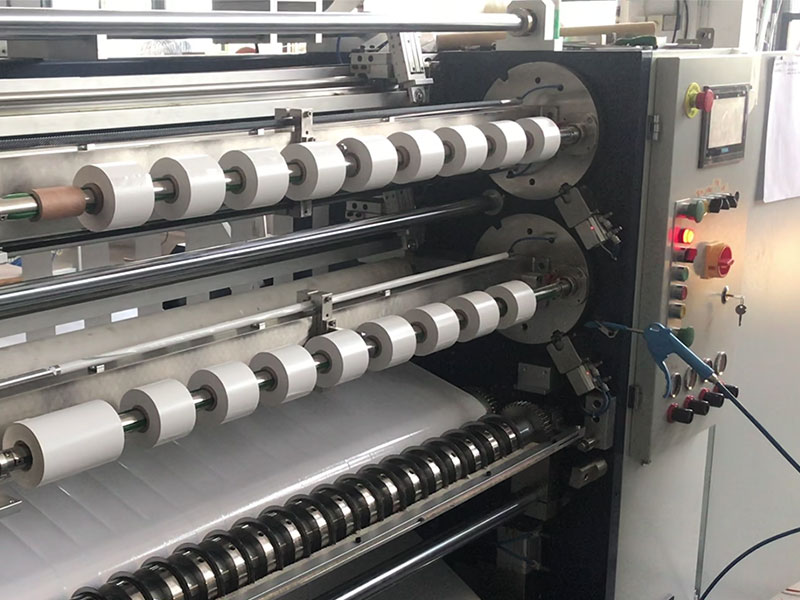
2. Material Characteristics: "Personalized" parameters of the substrate and adhesive layer
The efficiency bottleneck for single-sided adhesive often lies not in the machine, but in the material. Different substrates (such as BOPP, PET, cotton paper, fabric base) have vastly different sensitivity to tension.
• Tension closed-loop control: This is the core step. It is recommended to enable automatic tension calculation to adjust the torque of the magnetic powder brake or servo motor in real time according to changes in the diameter of the unwinding roll. For thin substrates, a "adhesiver tension" mode should be adopted (i.e., tension decreases as the roll diameter increases) to avoid tensile deformation that could cause inaccurate width and scrap.
• Adhesive layer stickiness effect: The adhesive layer of single-sided adhesive generates resistance during slitting with "self-adhesion" or "re-adhesion." If the adhesive layer is too sticky, the slitting environment temperature can be appropriately lowered (such as turning on the cooling roller), or rollers coated with silicone oil can be used to reduce frictional heat between the adhesive surface and the equipment, preventing melting and sticking to the knife that could cause paper breakage.
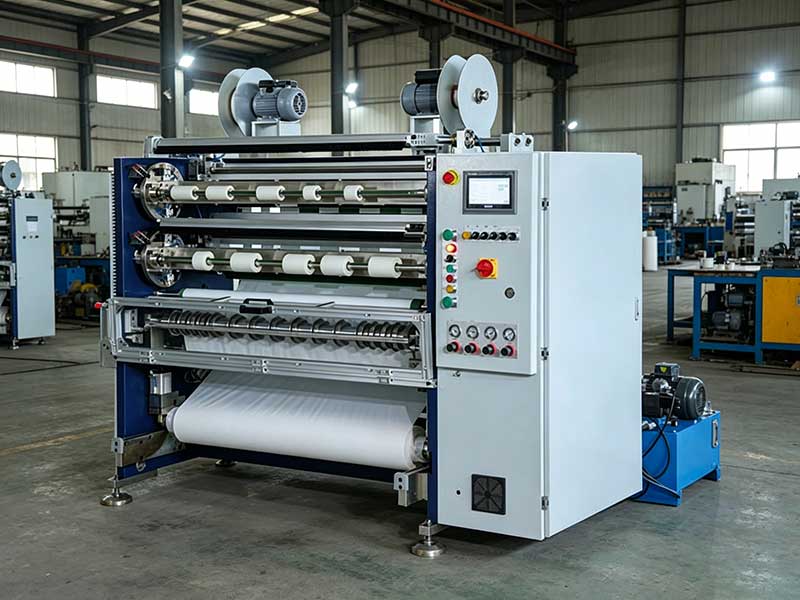
3. Process parameters: Coordination of tool speed, angle, and auxiliary devices
Even with advanced equipment, improper parameter settings still make it difficult to meet standards.
• Feed angle matched with speed: It is recommended to adjust the blade cutting angle according to the slitting width. Generally, when slitting narrow-width adhesive, if there are too many strips per shaft, the linear speed should be adjusted accordingly; otherwise, due to suction or pressure rollers, the single strip cannot be fully straightened, making it very prone to flashing.
• Static electricity and dust removal intervention: Single-sided adhesive slitting easily generates static electricity, which attracts dust or causes uneven winding ends, which seriously affects subsequent high-speed unwinding. Equipped with static elimination rods and an automatic labeling device (for marking joints), it significantly reduces slowdowns caused by human handling errors, an efficiency improvement often underestimated.
In summary, the key to improving single-sided rubber slitting efficiency lies in "refined control": using closed-loop tension systems to solve deformation issues, using high-rigidity tool shafts to address vibration issues, and regulating environmental temperature and humidity to resolve adhesive adhesion issues. When these key factors are systematically optimized, the rated speed of the equipment can truly be converted into actual production capacity, rather than just existing as a nameplate specification.
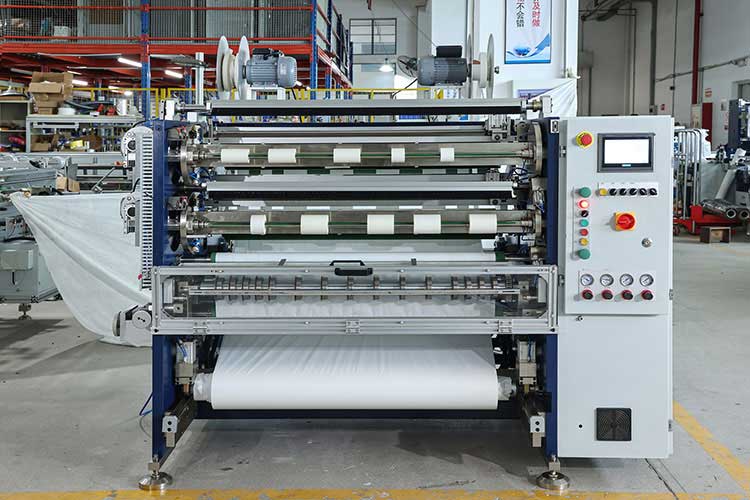
it is a specialized machine that precisely "breaks down wide-width tape rolls" into small finished rolls of narrow specifications to meet our requirements.
01. July, 2026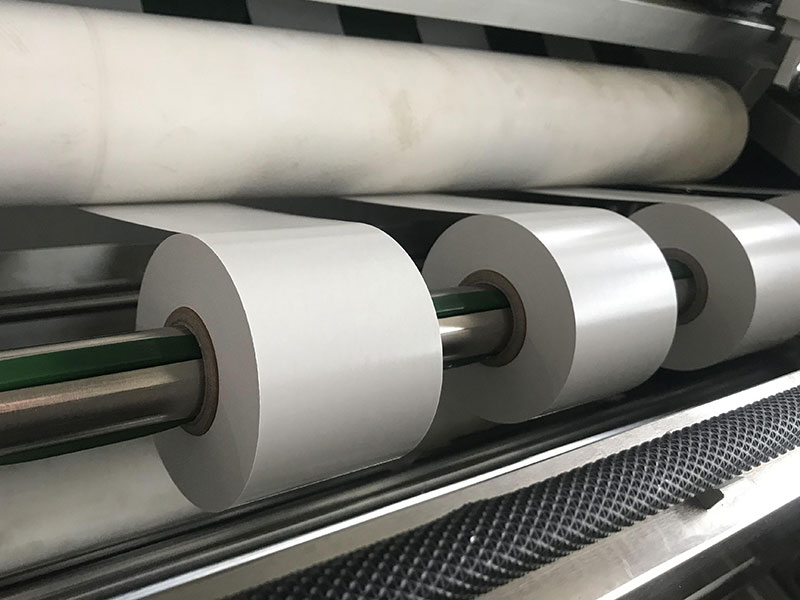
Scientific preventive maintenance is the fundamental guarantee for extending equipment lifespan and stabilizing product pass rates.
23. June, 2026Uneven winding, edge burrs, and abnormal operating noises are the three major problems troubling frontline operators.
15. June, 2026Faced with the dazzling array of slitting machine models and brands on the market, how can you choose the one that best suits your production needs?
11. June, 2026Many people find it complicated for the first time, but once you master the core steps, you can get started smoothly in just three minutes.
08. June, 2026


 English
 Deutsch
 Français
 Español
 Português
 日本語
日本語 русский
 한국어
한국어 عربي
عربي ภาษาไทย
 Tiếng Việt
 Italiano