
In the production chain of thermal transfer ribbons, slitting is a key factor determining the yield and quality of finished products. Wide rolls are cut into the narrow strip specifications required by customers, and the most troublesome problem for producers in this process is "edge running." If the ribbon undergoes axial deviation during high-speed operation, it can cause uneven edges and scrap rolls, or at worst, the entire shaft may be scrapped, or even damage expensive printheads due to edge protrusions. Traditional methods relying on mechanical barriers or manual surveillance are almost powerless against vehicles traveling at speeds of several hundred meters per minute. The value of the automatic correction function lies in incorporating this runaway variable into a precise closed loop, shifting slitting operations from "post-event selection" to "real-time self-healing."
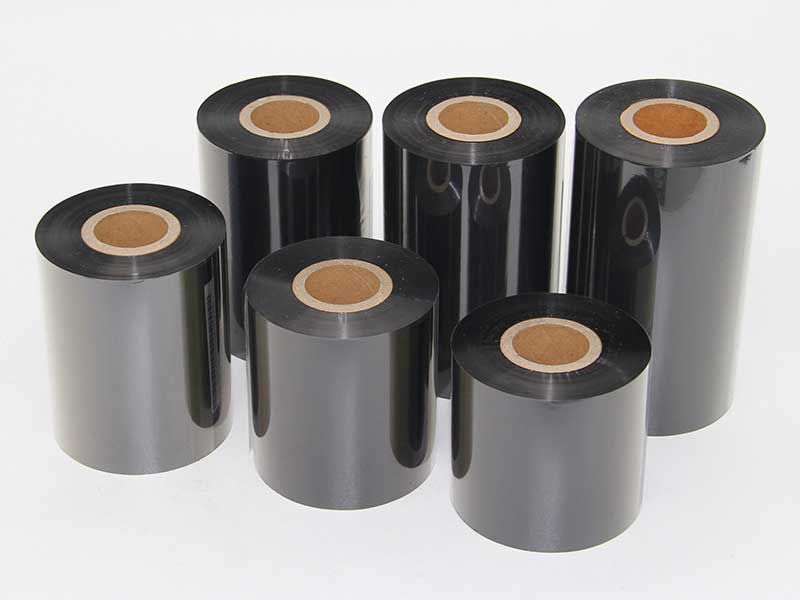
At the core of automatic correction is a closed-loop control logic of "perception—decision-execution." It is not mysterious, but it requires a high degree of coordination among three links. The detection step is handled by the correction sensor, which continuously scans the lateral position of the ribbon edge, converting micron-level offsets into electrical signals. Among current mainstream solutions, ultrasonic sensors are the most widely applicable because they are not affected by ribbon color or transparency, while optoelectronic sensors perform stably when edge color differences are obvious. Some high-end devices incorporate CCD line array cameras, achieving detection accuracy of ±0.1mm or even higher. The decision-making process is handled by industrial controllers, whose built-in PID or adaptive algorithms not only respond to current deviations but can also predict imminent deviations based on offset velocity and historical trends, issuing fine-tuning instructions in advance to avoid the lag of traditional switch-based control "acting only when it goes offline." During the execution stage, the correction frame is driven by servo motors or electric cylinders to move the deviation frame slightly laterally along the slide rail. In a typical structure, the receiving motor is fixed to the mounting base, which is slidably connected to the slide bar. The drive mechanism pushes the mounting seat to move horizontally, thereby guiding the entire material path to return to alignment without contacting the ribbon surface. This non-contact correction is crucial—ribbon coatings are extremely delicate, and any hard scratches can damage thermal transfer performance.
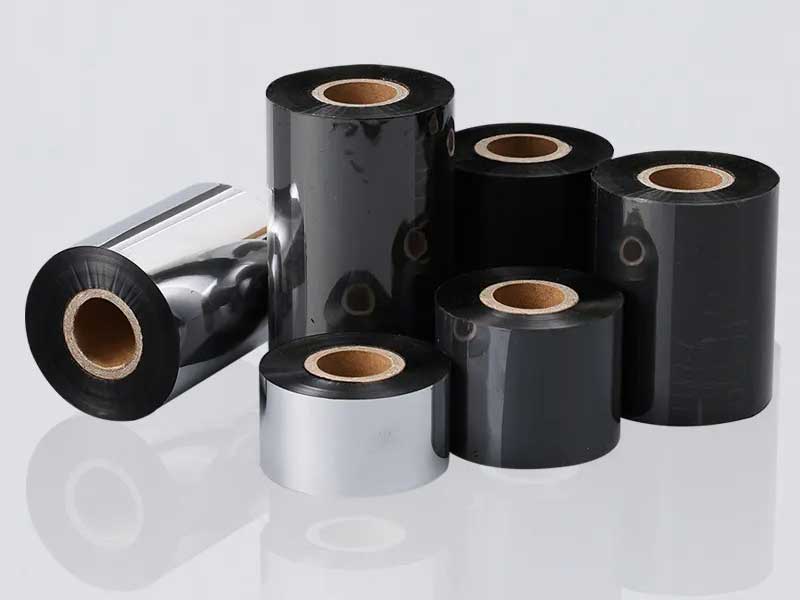
However, having precise hardware does not guarantee a neat end face. The performance of automatic deviation correction systems in actual operation heavily depends on the meticulousness of the debugging process. The sensor should be installed about 30 to 50 centimeters from the correction frame to ensure the detection point can detect deviation trends in advance; Zero calibration must place the ribbon edge precisely within the detection range; otherwise, all subsequent actions will be based on incorrect benchmarks. Even more subtle is the setting of the "dead zone" parameter: if the dead zone is too small, the centering frame will vibrate frequently due to frequent corrections, causing wavy patterns on the winding end face; If the dead zone is too large, correction lags and accumulated offsets cannot be eliminated in time. Industry experience typically starts with a ± of 0.2mm, then fine-tunes based on actual operating conditions. Response speed also needs to match linear speed; excessively fast gain at low-speed slitting can cause overtune oscillation, while insufficient response at high speeds can cause correction to fail to keep up with deviation. Balancing these parameters often requires operators to repeatedly experiment through idle runs and strap tests, rather than a single factory setup that can fix it once and for all.
Another layer of value in the correction system lies in its deep coupling with tension control. Ribbon deviation and tension fluctuations are often mutually causal: unstable tension causes lateral expansion and contraction deformation of the material, triggering deviation; After deviation, it causes uneven winding end faces, further imbalance in local tension. Therefore, high-precision slitting machines typically integrate centering with a closed-loop tension of the floating swing roller, performing the first coarse correction at the slitting blade outlet and another round of fine correction before winding, forming a coordinated control architecture. For narrow bands with slitting widths less than 10 millimeters, this coordination is especially critical. The narrow belt has extremely weak lateral rigidity. If the tension is too high during the winding, the ribbon will narrow like a stretched rubber band and slip out of the groove, making it difficult to recover even with the full force of the correction system. Experienced debuggers will reduce the winding tension during narrow band slitting to 60-70% of the conventional value, while appropriately lowering the vehicle speed to allow sufficient response window for the correction mechanism.

From a results-oriented perspective, the benefits from automatic correction are directly quantifiable. Using intelligent correction slitting machines, the defect rate caused by edge running can be reduced from 3% to 5% compared to traditional methods to below 0.2%. Behind this figure lies not only the savings in ribbon materials themselves but also significant reductions in hidden costs caused by downtime, debugging, manual intervention, and customer returns. Operators are freed from the state of "fixated on the edge and flustered," allowing them to manage multiple machines simultaneously, increasing per capita productivity. For high value-added products such as resin-based high-temperature resistant ribbons, the non-contact nature of correction also prevents damage to the edge coating, indirectly protecting the print head lifespan at the end printing stage.
Of course, automatic correction is not a cure-all. It addresses "real-time correction after deviation" but cannot eliminate the root cause of deviation. Problems such as excessive parallelism of the guide rollers, poor wavy shape at the ribbon edges, and sensor misjudgments caused by electrostatic dust adsorption in the workshop require mechanical calibration and daily maintenance to address. What a correction system can do is hold the final line of defense for accuracy on equipment that has been thoroughly calibrated. When a thin layer of dust accumulates on the sensor lens, even the smartest algorithm can be misled by false signals; When the guide roller itself has a parallelism deviation of 0.1 millimeters per meter, the correction mechanism must repeatedly correct the same systemic defect during each rotation cycle. Therefore, a rational attitude is to regard automatic deviation correction as an indispensable part of the precision slitting system, rather than a one-stop patch that cures all diseases.
Looking back at the development trajectory of the automatic correction function of ribbon slitting machines, its significance has long surpassed its single function of "preventing deviation." It frees the speed limit of slitting operations from being limited by human reaction limits, makes processing narrow strips and ultra-thin substrates possible, and shifts quality consistency from a "craftsmanship" dependent on the hands of experienced craftsmen to replicable and traceable "parameters." In today's tape industry, where profits are shrinking and customers' requirements for end-face uniformity are becoming more stringent, a well-tuned automatic correction system is the silent yet reliable gatekeeper on the production line.
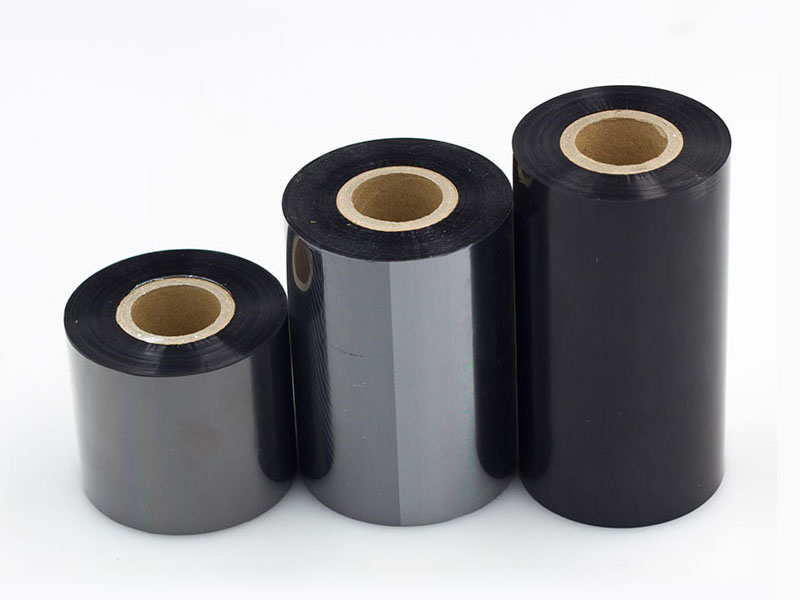
This article will break down the technical core of this function from four dimensions: signal detection, control logic, shutdown strategy, and precision calibration.
19. October, 2026
This paper proposes a practical efficiency improvement plan from three dimensions: downtime management, switching optimization, and tension upgrade.
19. October, 2026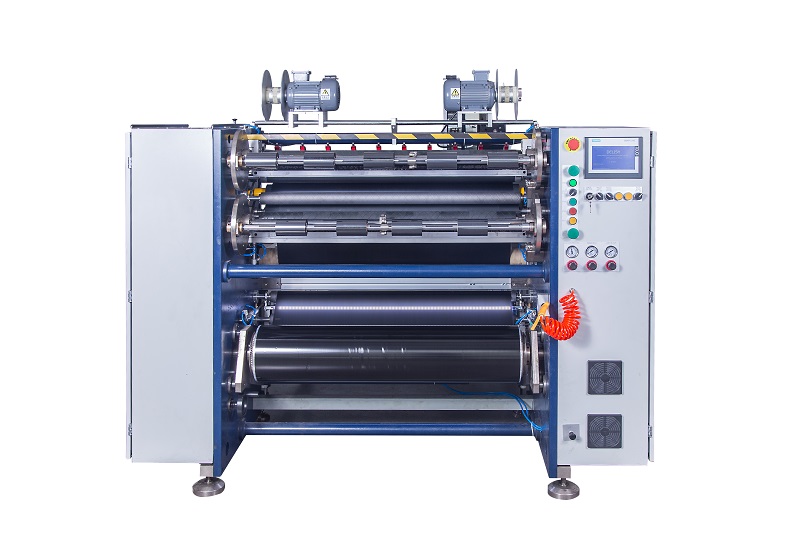
Choosing the right slitting machine is not just about buying a piece of equipment, but about establishing a production system that controls losses from the source.
17. October, 2026When tension is precisely controlled, the transfer quality, slitting yield, and production efficiency of the ribbon are fundamentally guaranteed.
17. October, 2026When a roll of perfectly slitted ribbon is loaded into the printer, smoothly moving along the tape and transferring clearly the print, the value of the slitting process quietly becomes realized.
17. October, 2026


 English
 Deutsch
 Français
 Español
 Português
 日本語
 русский
 한국어
 عربي
 ภาษาไทย
 Tiếng Việt
 Italiano